Hydrofoil Boards Explained: The Ultimate Beginner’s Guide
Hydrofoil boards? Yes, they’re exactly as wild as they sound. Picture this: you step onto a board, it starts moving, and then, almost like magic, the entire board lifts out of the water. You’re flying. Not on the water. Above it. Silently. Smoothly. Like a hovercraft made a baby with a surfboard and somehow won.
That’s what a hydrofoil board does, and if you’ve been seeing videos of people gliding above the ocean like they’ve hacked gravity, this guide is going to answer every single question running through your head right now.
Hydrofoil boards are one of the fastest-growing water sports on the planet now. According to Global Market Insights, the global water sports products market driven partly by the hydrofoil craze is projected to grow from $45.2 billion in 2026 to a staggering $81.1 billion by 2035.
That’s not a trend. That’s a revolution. And whether you’re a curious beginner wondering if this is for you, someone eyeing their first purchase, or just someone who needs to explain hydrofoil boards to their very confused family, you’ve landed in the right place.
What Exactly Is a Hydrofoil Board?
You know how a bird’s wings push air underneath them to fly? A hydrofoil board does the same thing, but with water. Instead of wings in the sky, it has a special underwater fin called a foil. As the board picks up speed, water pushes against the foil and lifts the entire board — and you — right out of the water.
That’s it. That’s the secret. Water + speed + clever wing shape = you floating in mid-air like some kind of water wizard.
More technically, a hydrofoil board is a board fitted with a hydrofoil system underneath it. The foil consists of four main parts: a mast (the vertical strut that connects the board to everything below), a fuselage (the horizontal backbone), a front wing (which generates the lift), and a rear stabilizer wing (which keeps everything balanced, like an airplane’s tail).
As the board gains speed, water flows over the front wing, creating upward force. Once that force exceeds your weight, the board rises clear of the surface and drag drops almost to zero. That’s when everything suddenly feels smooth, quiet, and almost weightless.
The physics behind it? That’s Bernoulli’s Principle at work, the same law that explains how airplane wings create lift. Water moves faster over the curved top of the foil wing than underneath it, creating a pressure difference.
The lower pressure on top and higher pressure on the bottom push the board up. MIT’s Department of Ocean Engineering confirmed this exact mechanism, noting that the lift-to-drag ratio is optimized at very small angles of attack — typically 3 to 4 degrees.
A Brief History: Where Did Hydrofoil Boards Come From?
Hydrofoil boards didn’t just show up on Instagram one day. This technology has deep roots.
Italian inventor Enrico Forlanini built one of the first functioning hydrofoil watercraft in 1906. For decades after that, hydrofoils were used mostly by military and commercial vessels because they could move faster over water with less fuel. By the 1950s and 60s, hydrofoil passenger ferries were already running in parts of Europe.
Water sports got their first real taste of foil technology in sailing, particularly in the America’s Cup races, where hydrofoil-equipped sailing catamarans started hitting speeds that were previously unthinkable.
Then in the 1990s and early 2000s, big wave legend Laird Hamilton started experimenting with foil boards in surfing, and the footage went viral before “viral” was even a word. People couldn’t believe what they were seeing.
Fast-forward to today, and hydrofoil boards are everywhere for surfing, kiteboarding, wing foiling, stand-up paddleboarding, and fully electric riding. The sport has gone from elite curiosity to a legitimate mainstream water discipline with competitions, schools, and gear for every budget.
How Does a Hydrofoil Board Work? (The Real Explanation)
Now let’s go a little deeper for those who want the full picture.
When you ask how does a hydrofoil board work, the honest answer involves two physics legends: Daniel Bernoulli and Isaac Newton.
Bernoulli’s Principle explains that when a fluid (like water) speeds up, its pressure drops. The foil wing is shaped, much like an airplane wing so that water moves faster over the curved top than along the flatter bottom. This creates lower pressure above the wing and higher pressure below, generating upward lift.
Newton’s Third Law plays its part too. The foil’s shape deflects water downward. Water gets pushed down, and you get pushed up. Equal and opposite reactions.
As production manager Collin Bangs of Air Chair explained to The Inertia: “The hydrofoil works under the exact same principles as an airplane.
You have two wings, one in the back and one in the front as a stabilizer, and you have high pressure and low pressure areas on the wing. And as it moves through the water, that creates lift just like with an airplane.”
The moment lift equals your body weight, the board pops above the surface. Drag drops dramatically because now only the slim mast and foil are in contact with the water, not the entire board.
That’s why hydrofoil boards feel so fast and so smooth. Less surface in the water means less friction, less resistance, and a ride that feels completely unlike anything you’ve experienced before.
One important thing to know: the angle of attack matters a lot. The foil needs to stay at a small, precise angle to the oncoming water.
Too steep (past about 15 degrees) and the foil stalls, losing lift instantly which means you’re going for an unplanned swim. This is why balance and weight distribution are so crucial when you’re learning.
The Different Types of Hydrofoil Boards
One of the most common questions beginners ask is: “Which type of hydrofoil board should I get?” The answer depends on how you want to generate the power to fly. Here are the main types of hydrofoil boards:
1. Surf Foil Boards
You paddle onto a wave just like regular surfing, but once the wave catches you, the foil lifts you above the surface. The result? You can ride tiny waves for much longer than you ever could on a regular surfboard, we’re talking 1.8 km rides on 0.6-meter swells that wouldn’t even register as a wave on a normal board.
The catch? Surf foiling has a steep learning curve. It’s not the best starting point for complete beginners.
2. Wing Foil Boards
This is where a lot of beginners are starting, and for good reason. You hold a handheld inflatable wing (think: a kite, but simpler and without long lines), which catches the wind and propels you forward. The foil does the rest.
Wing foiling works in as little as 10–12 knots of wind, which means you can ride on days when kitesurfers can’t. The board and foil are the same as other foil disciplines – the wing is your power source.
3. Kite Foil Boards
A large kite attached to a bar and lines pulls you across the water, and the foil beneath lifts you up. Kite foiling can reach serious speeds as experienced riders regularly hit 30–40+ mph.
It’s thrilling, but it comes with a steeper learning curve than wing foiling and requires more space to safely launch.
4. SUP Foil Boards (Stand-Up Paddle Foiling)
A stand-up paddleboard with a hydrofoil attached. You use a paddle to generate momentum, often chasing downwind swells or ocean bumps.
SUP foiling is a beautiful, meditative experience when you get it right, quietly gliding across water using nothing but wave energy and your paddle. It’s popular among experienced SUP riders looking for the next challenge.
5. Wake Foil Boards
You’re towed by a boat, and the foil lifts you above the wake. Once you’re up, you can break away from the boat’s wake and ride the flat water freely.
This is actually one of the most beginner-friendly ways to try foiling because the boat controls your speed, removing a major variable.
6. Electric Hydrofoil Boards (eFoils)
No wind. No waves. No boat. Just you, a board, and a wireless hand controller. This is where hydrofoil technology gets truly mind-blowing.
Electric Hydrofoil Board Review: The Game-Changer
If there’s one category that has exploded in popularity, it’s the electric hydrofoil board or eFoil. An eFoil is a hydrofoil board with a built-in electric motor, powered by a rechargeable lithium-ion battery inside the board.
You hold a small wireless remote and control your speed with your thumb. The motor spins a propeller (or jet) under the water, generates forward motion, the foil does its thing, and you’re flying above the water.
No waves needed. No wind required. Dead-calm Lake at sunrise? Perfect. Ocean? Perfect. River? Also, perfect.
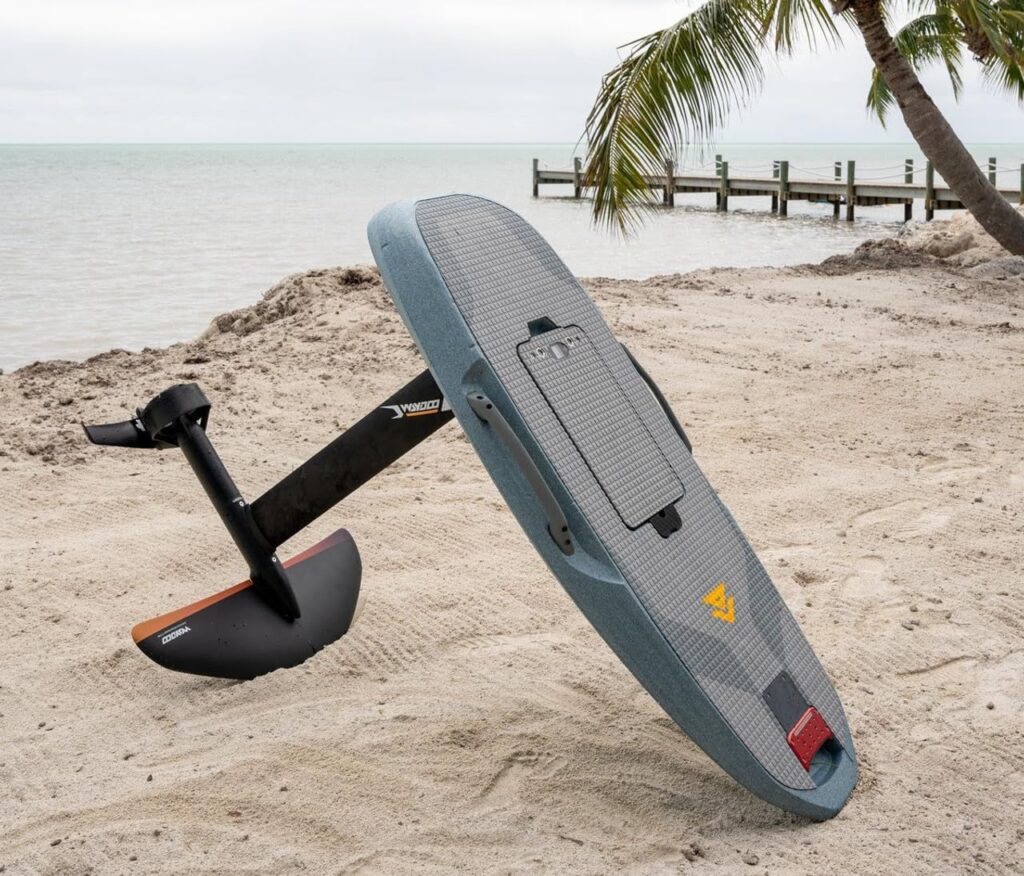
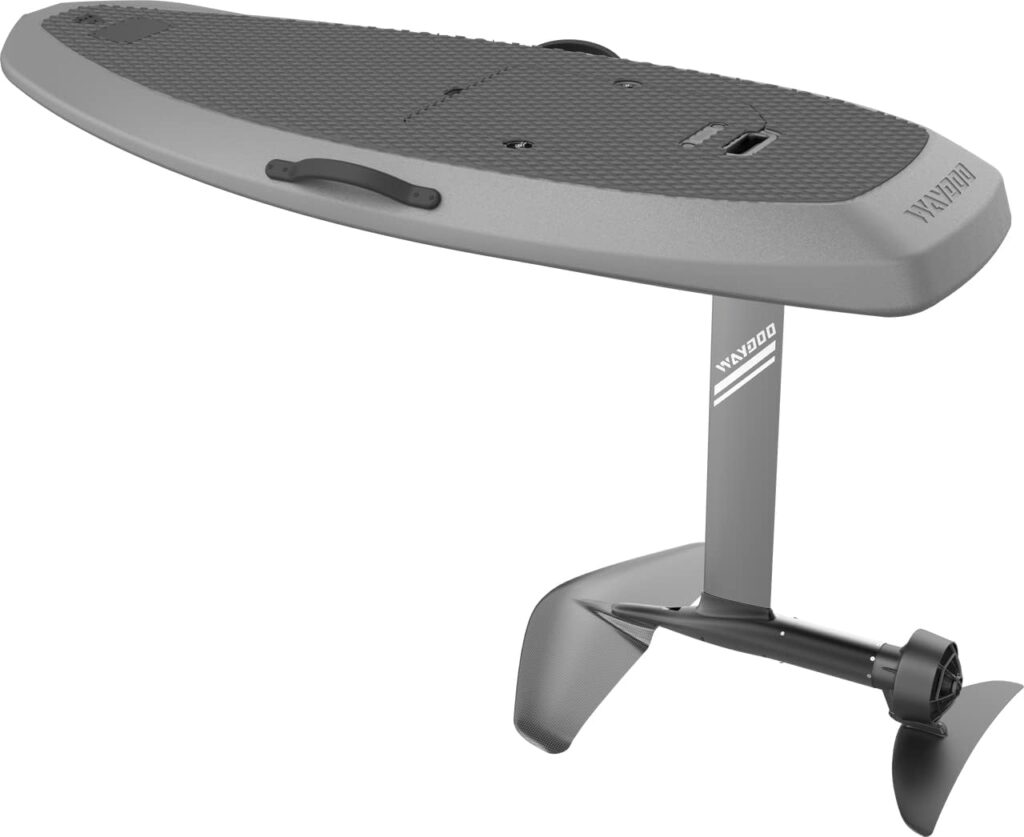
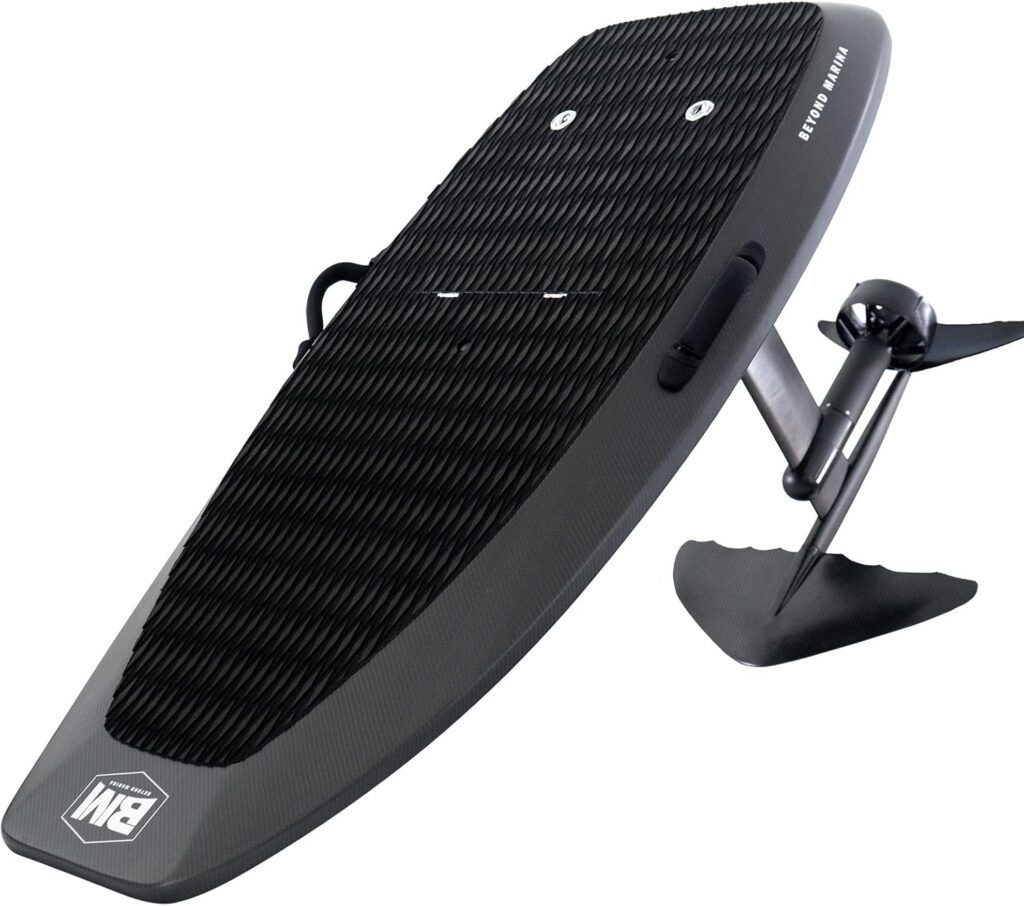
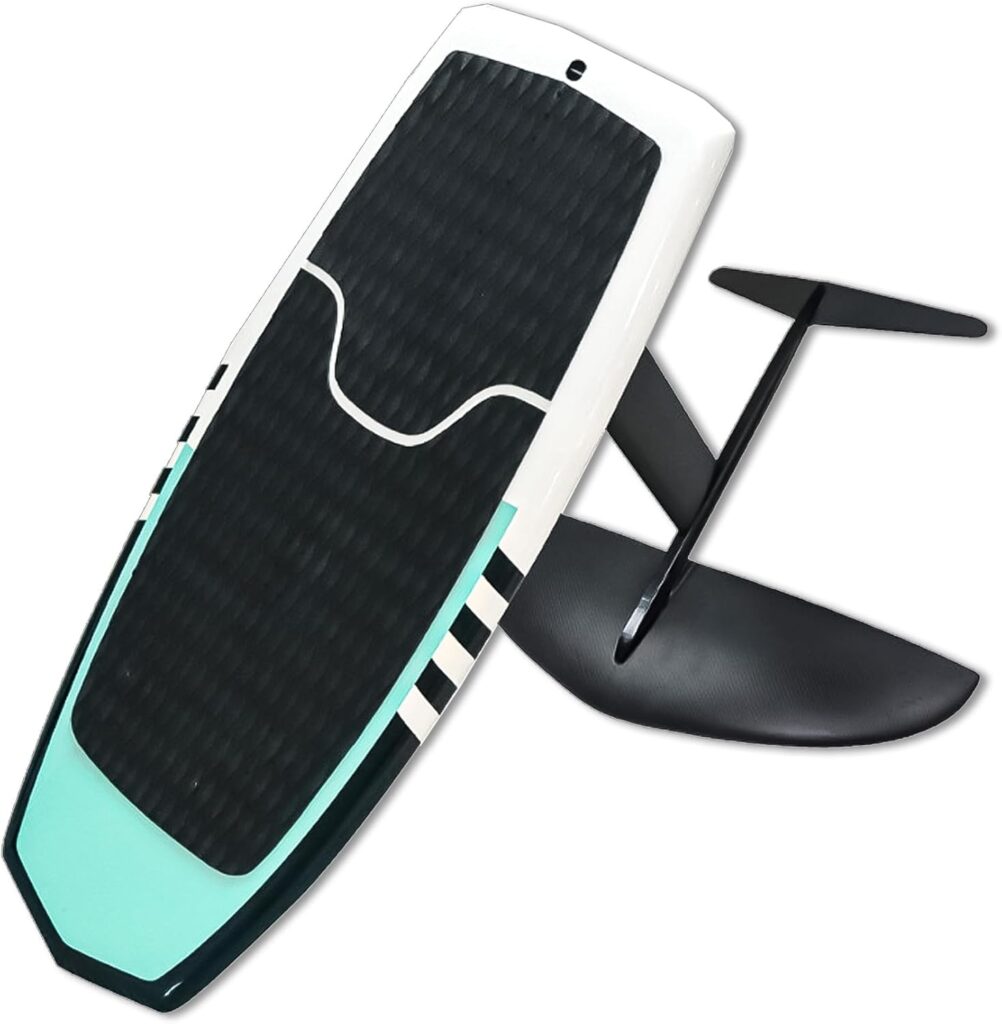
Here’s a quick breakdown of the best electric hydrofoil board options available right now:
Lift Foils (Lift5) — Considered the gold standard by many experienced riders. The Lift5 comes with a redesigned board shape, streamlined mast, and updated motor. It’s compatible with a wide range of wings and has an excellent dealer network. Price: $12,000–$16,000+.
Fliteboard — The most complete lineup on the market. Fliteboard offers everything from the beginner-friendly AIR (an inflatable eFoil!) to the performance-focused Ultra L2. The Flite AIR packs into a golf bag — genuinely great for travel. Price range: approximately €6,500–€18,000.
Waydoo Flyer One+ — The best value entry-level eFoil now. It comes with flight-assist gyros for added stability, a durable foam deck perfect for beginners, and a modular mast system. Testers consistently praise it for its approachability and durability. Price: approximately $5,800–$7,500.
SiFly Rider — A soft-top mid-market eFoil. At 110 liters of volume, it’s very buoyant and forgiving, making it one of the most beginner-friendly setups available. It can also be upgraded as your skills improve. Price: approximately $7,000–$9,000.
As a general rule, entry-level eFoils start around $5,800–$7,000. Premium carbon-fiber models from top brands can reach $15,000–$20,000. Most premium brands retain around 70% of their resale value after two seasons if properly maintained.
Important safety note: Most eFoils are designed to automatically cut the motor when you release the controller trigger. So, when you fall and you will fall, the board stops immediately. This is a critical safety feature. Always verify it before you ride.
Hydrofoil Board for Beginners: What to Look for
Let’s say you’re brand new to all of this. You’ve never foiled before. What does a good hydrofoil board for beginners actually look like?
Here’s what matters most:
Board Volume: More volume means more buoyancy and stability. For beginners, look for boards in the 80–110 liter range. The extra volume makes it easier to paddle, balance, and recover from mistakes. A 4’2″ to 4’8″ board is a standard hydrofoil size, and boards in the 32–38 liter range work well for beginner-to-intermediate riders.
Large Front Wing: Bigger foil wings (200+ cm² surface area) generate more lift at lower speeds and are more stable. This means you’ll get up on the foil sooner and have more time to find your balance. As you improve, you can swap to smaller, faster wings.
Short Mast: A shorter mast (around 55–65 cm) keeps you closer to the water, which makes wipeouts less dramatic and less intimidating. Longer masts offer better performance in choppy water but demand more balance.
Soft-Top or Foam Construction: If budget allows, consider boards with foam or EPP (expanded polypropylene) deck surfaces. They’re more forgiving on your body when you inevitably fall on or near the board.
Aluminum vs. Carbon: Aluminum masts are heavier but affordable, making them ideal for learning. Carbon fiber masts are lighter, stiffer, and more responsive — but they come at a significantly higher price and can crack on impact. Start with aluminum, upgrade later.
Complete Kits: For beginners, buying a complete matched kit (board + foil + mast + wings) is strongly recommended over piecing together individual components. Compatibility issues between mismatched parts can cause poor performance or even safety problems.
Entry-level complete hydrofoil kits from reputable brands like Slingshot and Mackiteboarding start around $1,200–$1,500.
Hydrofoil Board Cost: What Will This Actually Set You Back?
Let’s have the money conversation, because hydrofoil boards aren’t cheap and you deserve to know exactly what you’re getting into.
Here’s a realistic breakdown of hydrofoil board cost in 2026:
| Type | Entry-Level | Mid-Range | Premium |
| Surf / Kite / Wing Foil (manual) | $1,200–$2,500 | $2,500–$5,000 | $5,000–$10,000+ |
| Wake Foil (board + foil) | $1,500–$3,000 | $3,000–$6,000 | $6,000+ |
| eFoil (electric) | $5,800–$7,500 | $7,500–$12,000 | $12,000–$20,000+ |
Beyond the board itself, don’t forget to budget for:
- Safety gear (helmet, impact vest, leash): $200–$600
- Wetsuit (for colder water): $150–$400
- Lessons: $100–$300 per session — highly recommended
- Anti-corrosion lubricant (Tef-Gel or equivalent): $20–$40
- Board bag: $100–$300 (carbon fiber boards are brittle so, a drop on pavement is expensive)
One commonly overlooked hidden cost: many listings for “foils” only include the underwater hardware, not the board. Always confirm whether the board is included before purchasing.
Also worth knowing: top-tier eFoil brands like Lift Foils and Fliteboard hold approximately 70% of their value after two seasons so, if you buy used from a reputable source, you can get into the sport for significantly less.
Wing Foiling vs. Kitesurfing: Which Is Better for You?
This is one of the most-asked questions in the foiling world right now, so let’s settle it properly.
1. Wing Foiling
Wing foiling uses a handheld inflatable wing which looks like a small kite, but you hold it directly in your hands without any lines or harness attachment to the board. The wing catches the wind, you generate forward motion, and the foil lifts you up.
You can release the wing at any moment to instantly depower. Wing foiling can be done in winds as low as 10 knots, it works in confined spaces (no huge launch area needed), and it’s widely considered the easier of the two disciplines to learn.
2. Kitesurfing
Kitesurfing uses a large kite attached to you via a bar, lines, and a harness. The kite generates much more power than a wing, enabling bigger jumps, faster speeds, and more aggressive freestyle tricks. Experienced kite foilers regularly hit 35–40+ mph.
The gear is slightly more complex to set up, requires open space for launching, and the learning curve particularly for kite control is steeper.
So, which is better for beginners? The consensus among instructors and experienced riders is that wing foiling is generally easier and safer to learn for most people.
As ENSIS Academy puts it: “It is generally agreed that wing foiling is easier to learn than kitesurfing. The wing foil wing is easier to handle on the first attempt.”
That said, kitesurfing has a larger established community, more schools, and arguably more long-term potential for high-performance riding. If you’re coming from a kitesurfing background, transitioning to foiling is relatively seamless.
Bottom line on this comparison: If you’re starting from scratch with no wind sport experience, wing foiling is the friendlier entry point. If you’re already a kite rider, kite foiling is your natural next step.
Hydrofoil Board vs. SUP: What’s the Difference?
You might be wondering: do I need to buy a whole new board, or can I just attach a foil to my current SUP?
Good news: some crossover boards exist that work for both. Many modern foil boards are designed as versatile platforms that can be used for SUP foiling, wing foiling, or even prone foiling by simply changing the propulsion method (wing vs. paddle) while keeping the same foil setup.
That said, a dedicated hydrofoil board vs. SUP comparison reveals some important differences:
| Feature | Standard SUP | Hydrofoil Board |
| Rides on the water | Yes | No, rises above it |
| Board volume | 150–350 liters (typically) | 32–110 liters |
| Speed | 3–6 mph average | 15–40+ mph |
| Stability | Very stable | Requires balance training |
| Works in no wind / flat water | Yes (with paddle) | Yes (with eFoil) / No (with wind/wave foils) |
| Best for flat water cruising | Excellent | eFoil is excellent; manual foils need some propulsion source |
| Learning curve | Low | Moderate to steep |
| Cost | $400–$2,000 | $1,200–$20,000+ |
If you love the peace and simplicity of a flat-water paddle, a standard SUP is wonderful and doesn’t need a foil. But if you want to level up and experience riding above the water, a dedicated foil setup is the way to go.
And if you specifically want the best foil board for flat water, an eFoil is your answer as it needs no waves and no wind, making it perfect for lakes, harbors, and calm bays.
The Best Foil Board for Flat Water
Not everyone lives near ocean waves or consistent wind. So, what if you just have a flat lake?
Great news, flat water is actually ideal for learning hydrofoiling, and there are great options for it:
For learning (any foil discipline): Flat, calm water is the best place to develop your balance and feel for the foil without the added variable of chop or swell. Most instructors specifically recommend beginning on flat water.
Best flat-water specific options:
- Waydoo Flyer One+ (eFoil): No wind, no waves needed. Works perfectly on any calm body of water. Great beginner-friendly controls and gyro-assisted stability. Starting around $6,000.
- Flite AIR (eFoil): An inflatable eFoil that rolls into a bag for travel and works beautifully on flat lakes. Around €6,500.
- Wake Foil setup (tow-behind): If you have access to a boat, a wake foil on a calm lake is one of the best beginner experiences available.
- Pump Foiling: An advanced technique where experienced riders generate lift purely through rhythmic weight-transfer pumping motions; no wind, no motor, no waves. It requires significant skill but is one of the most meditative and satisfying experiences in water sports.
Hydrofoil Surfing Tips: How to Actually Get Up on Foil
Whether you’re taking lessons or self-teaching (lessons are strongly recommended), here are the most important hydrofoil surfing tips for beginners:
1. Take a lesson first. Seriously. A qualified instructor will save you weeks of frustration and reduce your injury risk dramatically. Most foil schools can get a complete beginner to their first “flights” within 2–3 sessions.
2. Start with a large board and large wing. The bigger the board and front wing, the slower you can go while still getting lift. More lift at slower speeds = more time to find your balance.
3. Keep your weight centered. The most common beginner mistake is shifting weight too far forward (nose dives, board goes down) or too far back (board shoots up, then stalls). Think “equal pressure on both feet” and let the foil do the work.
4. Look forward, not down. Your body follows your eyes. Look down at the water and you’ll go down. Look at the horizon and you’ll stay level. This sounds simple, but it’s easy to forget in the moment.
5. Start slow. The foil wants to lift you, you don’t need to go fast. Excessive speed before you’ve developed your balance is how people get hurt. Ease into it.
6. Learn to fall safely. Fall away from the board, not onto it. The mast and foil components are hard and sharp. Tuck your arms and try to enter the water feet first or flat, away from your equipment.
7. Keep sessions short at first. Foiling is surprisingly physically and mentally tiring. Thirty minutes of focused learning is worth more than two hours of exhausted flailing. Rest, watch, reflect, then go again.
8. Practice balance on land. Spend time on a balance board or doing single-leg stability exercises. Your core and ankle stability will directly translate to better foil control on the water.
Foil Surfing Safety Gear: Don’t Skip This Section
This is not optional reading. The foil components especially the mast and wings are made of aluminum or carbon fiber and have sharp edges.
At speed, a fall near the board can cause serious injury. The water sports community has been clear about this: foil surfing safety gear is non-negotiable.
Here’s what you need before your first ride:
Helmet: A watersports-specific helmet is essential. It should fit snugly, cover your temples, and stay on during impact. Impact helmets designed for wake sports or white-water kayaking work well. Cost: $60–$200.
Impact Vest / PFD: A foam impact vest (not just a life jacket) provides both flotation and impact protection for your torso. Look for vest certified to at least 50N buoyancy. Cost: $80–$250.
Leash: A foil-specific leash connects you to the board so it doesn’t fly away after a wipeout — and so you can get back on it. Make sure to use a leash with a quick-release mechanism so it doesn’t tangle in the foil. Cost: $30–$80.
Wetsuit or Rash Guard: Even in warm water, a rash guard or thin wetsuit protects against abrasions. In cold water, a 3mm+ wetsuit is a must. Cost: $50–$400.
Booties (optional but recommended): Neoprene water boots protect your feet if you land near the foil. Cost: $30–$80.
Maintain a safe distance from others. Hydrofoil boards require significant clearance from swimmers, other water users, and rocky shorelines. Most experienced coaches recommend keeping at least 50 meters of clear space around you while learning.
Some jurisdictions have already introduced regulations around foil surfing in public areas so always check local rules before heading out.
A sharp trailing edge on some aluminum masts can be sanded down before use for added safety. This is a simple but smart modification many experienced foilers make immediately on new gear.
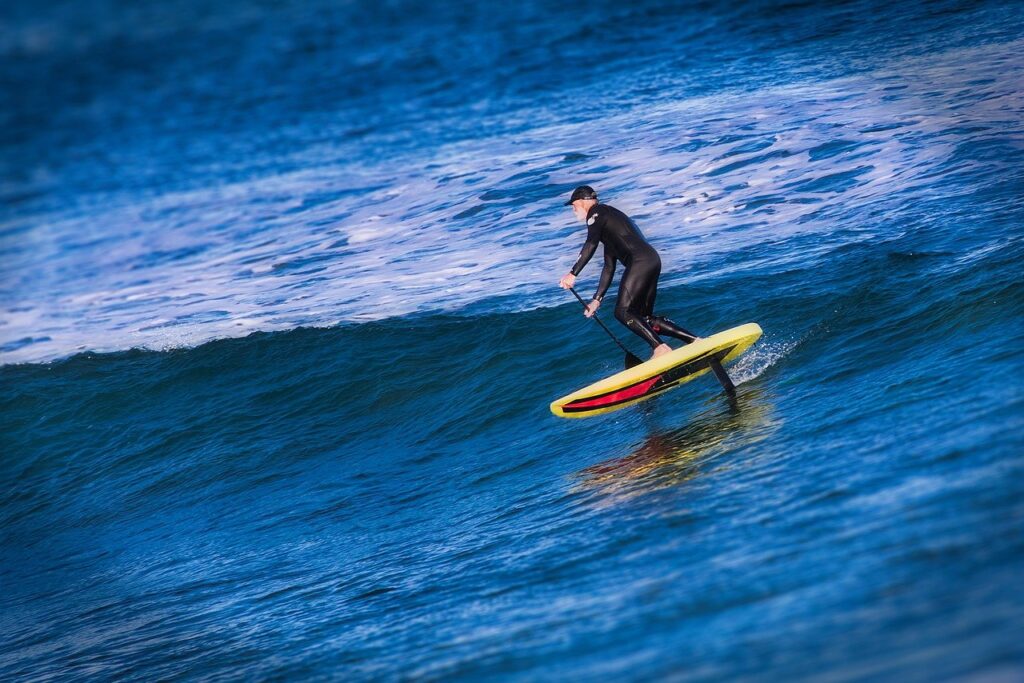
Frequently Asked Questions About Hydrofoil Boards
Is Hydrofoiling Hard to Learn?
It depends on your background. Complete beginners usually get their first foil flights within 2–5 lessons.
People with surfing, wakeboarding, kitesurfing, or snowboarding experience tend to progress faster because they already understand balance and edge control. eFoiling is considered the easiest entry point because the motor takes over the speed variable.
How Fast Does a Hydrofoil Board Go?
It varies hugely by type. Casual eFoil cruising sits around 15–20 mph. Kite foiling can reach 35–45+ mph for advanced riders. The current eFoil speed record is held by the Peakfoil 4C at approximately 62 km/h (38.5 mph).
Most beginner rides happen in the 10–20 mph range, which feels very fast because you’re above the water.
How Old Do You Need to Be?
Most eFoil manufacturers recommend riders be at least 16 years old. For non-powered foiling, age matters less. What matters more is swimming ability, physical coordination, and the presence of an adult supervisor for younger riders.
Can I Foil on A Lake?
Absolutely. Flat water is excellent for learning, and eFoils work on any body of water; lake, harbor, river, or ocean. For non-powered foil disciplines, you’ll need either wind (wing foiling/kite foiling) or waves/boat wake.
How Long Does an eFoil Battery Last?
Most eFoils provide 60–90 minutes of ride time on a full charge, depending on rider weight, speed, and conditions. The SiFly Rider tested at 65 minutes for a 95 kg rider. Some high-capacity setups (like the SCUBAJET) claim up to 3 hours.
Is Hydrofoiling Dangerous?
All water sports carry some risk. Hydrofoiling has specific risks because the foil components are sharp and hard.
However, with proper safety gear (helmet, impact vest, leash), lessons from a qualified instructor, and appropriate distance from other people, it’s a manageable and rewarding sport. Most injuries happen when beginners skip safety gear or ignore distance guidelines.
Can I Use a Regular Surfboard?
No. A standard surfboard doesn’t have the mounting hardware for a foil. You need a board specifically designed for foiling, or one that has been fitted with a foil box. However, some companies sell foil retrofit kits for compatible boards.
Does Hydrofoil Work in Choppy Water?
Yes, in fact, one of the great paradoxes of hydrofoiling is that once you’re up on the foil, choppy water becomes smoother. Because you’re riding above the surface, small chop doesn’t reach you.
You literally float above the mess. This is one of the reasons kite foilers love it, they can ride in conditions that would be punishing on a regular board.
What’s The Best Brand for Beginners?
For eFoils: Waydoo and SiFly are widely recommended for their value and beginner-friendly features. For non-powered foil kits: Slingshot, GoFoil, and Gong offer excellent beginner packages at reasonable price points. For premium all-round: Lift Foils and Fliteboard are the benchmark.
Do I Need to Be Fit to Hydrofoil?
You don’t need to be an athlete, but core strength and balance definitely help. Wing foiling is physically demanding on your arms initially. eFoiling requires very little physical effort as it’s more about balance and subtlety than raw fitness.
Either way, a few weeks of balance and core training before your first session will make a noticeable difference.
The Pros and Cons of Hydrofoil Boards (Honest Assessment)
Pros:
- An absolutely unique riding sensation you can’t get any other way
- Works in conditions where other board sports fail (light wind, small waves, flat water with eFoil)
- Once up on foil, choppy conditions become smooth
- Riding above the water significantly reduces drag, enabling higher speeds
- eFoils require no weather conditions at all
- A rapidly growing community with lessons available worldwide
- Premium eFoil brands hold strong resale value
Cons:
- High cost especially for eFoils
- Sharp foil components require careful safety practices
- Steeper learning curve than conventional surfing or paddleboarding
- eFoil batteries need careful maintenance and replacement over time
- Saltwater corrosion is a real issue so, regular rinsing and anti-corrosion treatment is essential
- Some crowded beaches and waterways have restrictions on foil use
- Transport can be cumbersome for hardboard setups
Is a Hydrofoil Board Right for You?
If you’re asking yourself that question, here’s a simple way to think about it:
You’re a great candidate for hydrofoiling if:
- You already enjoy water sports and want the next level of experience
- You have access to calm water (especially great for eFoils)
- You have a moderate budget ($1,200+ for manual foiling, $6,000+ for eFoiling)
- You’re patient and willing to take lessons
- You love the idea of silent, floating, above-water riding
You might want to wait if:
- You can’t swim confidently
- Your budget is very tight (this is not a cheap sport)
- You’re looking for something to master in a single afternoon
- You have significant shoulder or knee injuries (balance demands can be taxing)
The Bottom Line on Hydrofoil Boards
Hydrofoil boards are underwater wing systems that use physics to lift you above the water’s surface, creating a riding experience that feels like flying. They come in manual versions (surf foil, wing foil, kite foil, wake foil, SUP foil) and fully electric versions (eFoils).
The physics is the same across all of them; Bernoulli’s Principle and Newton’s Third Law working together to get you airborne. Costs range from around $1,200 for a basic entry foil kit to $20,000+ for top-tier electric setups.
Beginners should start with high-volume boards, large front wings, short masts, and most importantly, proper safety gear including a helmet, impact vest, and foil-specific leash. Wing foiling is currently the easiest discipline for newcomers.
eFoiling is the most accessible of all, requiring no waves or wind. For flat water, eFoils are unbeatable. For budget-conscious beginners, wake foiling with a boat is the most forgiving way to get your first flight.
And while the learning curve is real, so is the payoff. Once you’re gliding silently above the water, watching the surface drop away beneath your board, you will understand exactly why this sport is growing at the speed it is.
Got a question we didn’t answer? Drop it in the comments below and we’ll add it to this guide. At WaterComfy, our goal is to make water sports accessible to every skill level and every budget. Happy foiling!