Are Motorized Electric Fins Legal? The Complete Rulebook
Are motorized electric fins legal? It’s the question every surfer should ask before they ever charge a battery or click a fin into their board and the honest answer is: it depends entirely on where you live and where you plan to ride.
isn’t a simple yes-or-no situation, and anyone who tells you otherwise hasn’t done the homework. Maritime law treats motorized propulsion very differently depending on the country, the state, and even the specific waterway.
Here’s the part that surprises most people: in several places, a motorized electric fin doesn’t just need a quick legal check; it may legally require vessel registration, a license, or fall under rules originally written for jet skis.
Why Is This Even a Legal Question?
It might seem strange that a fin, a single component of a surfboard, could trigger maritime law. But the reason becomes clear once you understand what regulators actually look at: not the size of the device, but whether it provides motorized propulsion.
Maritime and boating authorities around the world generally don’t write laws around board shapes or sporting equipment categories. They write laws around propulsion type. A human paddling a surfboard is one category.
A device that uses a motor to move a person through water, regardless of how small that motor is, or whether it’s built into a fin, a board, or a separate unit, frequently falls into the same legal bucket as jet skis, electric boats, and other powered watercraft.
| Key Insight: Most maritime authorities don’t ask, “Is this a surfboard?” They ask, “Does this have a motor that propels a person through water?” That single distinction is the root of almost every legal question around motorized electric fins. |
How Does a Motorized Electric Fin Work? (And Why It Matters Legally)
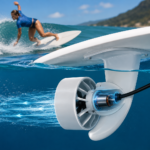
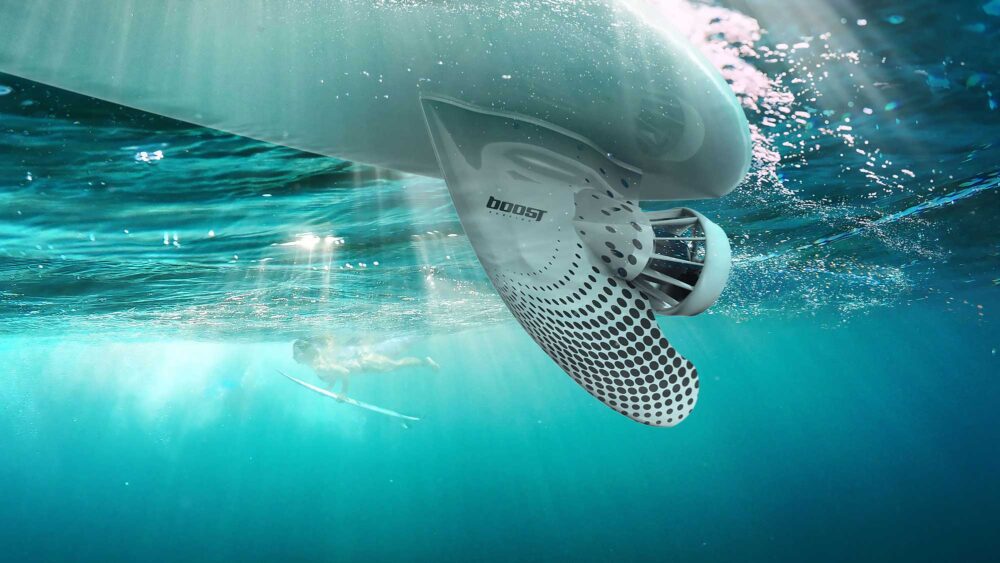
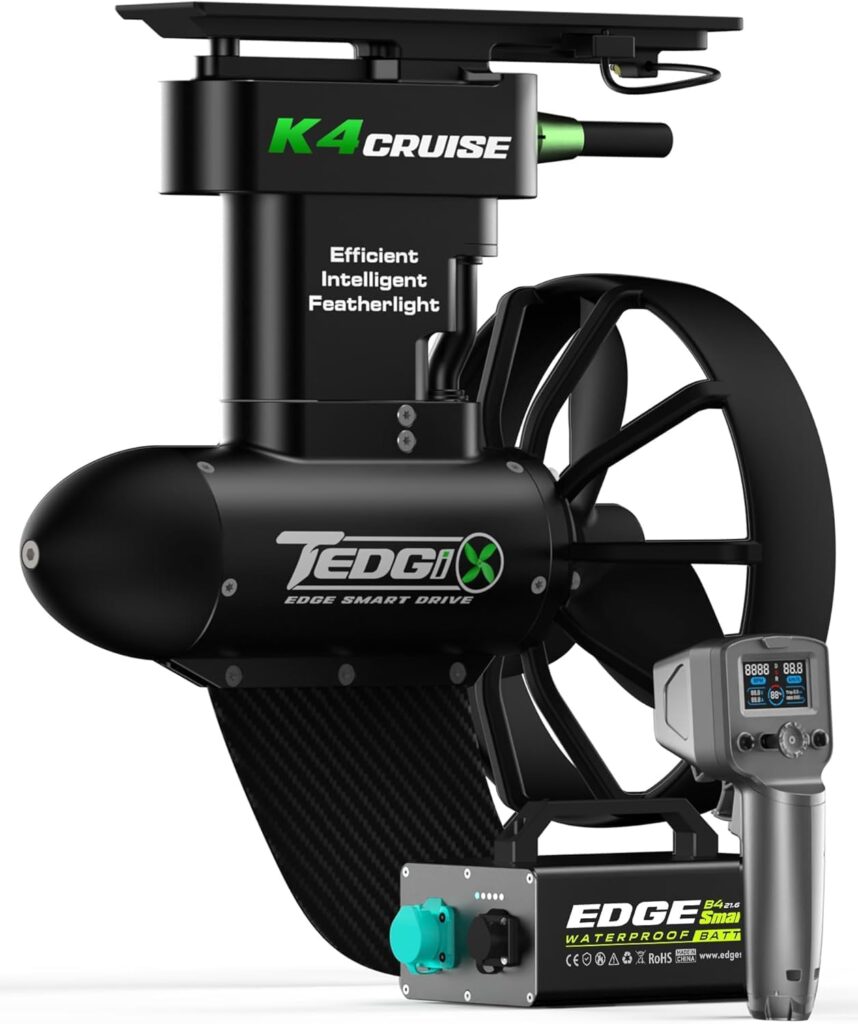
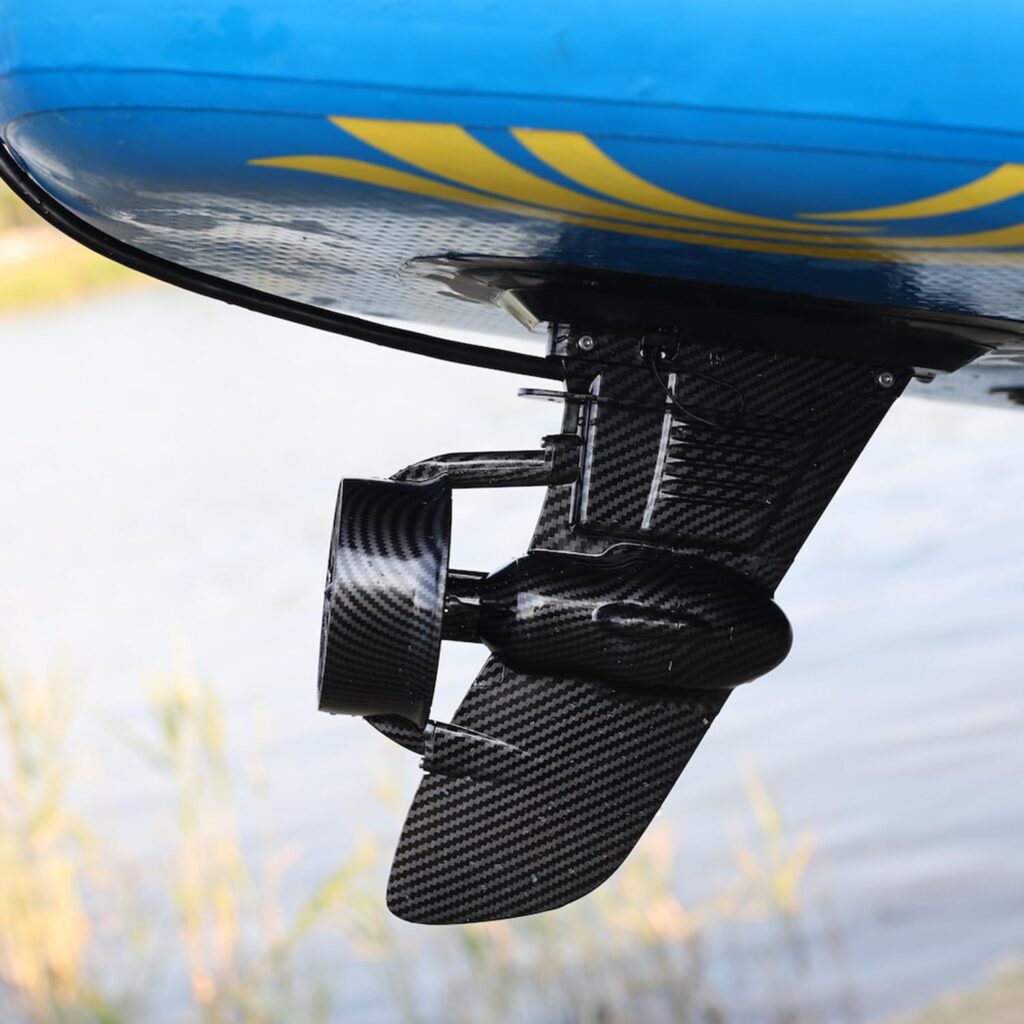
Understanding how a motorized electric fin works is actually essential to understanding the legal landscape. A motorized electric fin houses a brushless electric motor, a rechargeable lithium-ion battery, and a propeller: all sealed inside a waterproof casing that fits into a standard FCS II or Futures fin box.
When activated via a wireless remote, the motor spins the propeller, generating forward thrust that moves the board through the water.
From a regulatory standpoint, this is precisely the feature that matters: motorized propulsion. It doesn’t matter that the device looks like a normal fin, weighs under 2 kilograms, or that the surfer is still paddling and steering with their body.
The presence of an electric motor providing propulsion is enough to bring many motorized electric fins under the same legal definitions used for personal watercraft (PWC), jet skis, and small electric boats in numerous jurisdictions.
This is also why the power output matters. Fins with motors generating 400W to 1,200W and assisted speeds of 10–20 km/h are functionally similar from a legal classification standpoint to small electric outboard motors, even though the experience for the rider feels nothing like operating a boat.
Are Motorized Electric Fins Legal in the United States?
The United States has no single federal law specifically addressing motorized surfboard fins. Instead, regulation happens at the state level, and several states have already encountered this exact technology through electric foil boards and motorized surfboards, setting useful precedent.
California
California has been one of the most active states in addressing motorized water sports equipment.
The California Department of Motor Vehicles requires any boat or vessel with a motor, regardless of size, to be registered in order to legally operate on California waterways.
This rule has already been applied to electric foil surfboards, with harbor authorities in Oceanside confirming that electric foil surfboards have become a regulatory talking point as the category has grown.
Beyond registration, some California harbors and marinas have banned motorized surf-style craft entirely for safety reasons, separate from the registration question. Always check with your specific harbor or beach authority.
Florida
Florida takes a particularly strict approach: state law requires that all vessels equipped with an electric motor, of any size whatsoever, be registered.
Surfers and water sports enthusiasts in Florida have reported registering their electric-assisted boards as “home-built vessels” through their local tax collector’s office, a process that typically costs around $30–$40 and does not require a formal inspection in most counties.
Hawaii
Hawaii currently requires that anything equipped with a motor be registered with the state, with an identification number displayed on the device.
While certain regulations include exclusions for standard surfboards, those exclusions are not intended to cover motorized surfboards or motorized fins, meaning registration is the safer assumption.
Texas
Texas applies one of the broadest definitions in the country: any craft or vessel, including boards, dinghies, and even inflatable tubes, equipped with any propulsion device beyond oars, paddles, or sails, must be registered and display visible registration. Operating an unregistered motorized device in Texas waters can result in fines.
| Bottom Line for U.S. Surfers: If your motorized electric fin has any motor at all, assume registration is required until you’ve confirmed otherwise with your state’s DMV, Department of Natural Resources, or equivalent maritime authority. The trend across multiple states points toward registration as the default expectation, not the exception. |
Are Motorized Electric Fins Legal in Australia?
Australia offers the clearest, most specific precedent of any country when it comes to motorized surf equipment and it’s worth paying close attention to.
New South Wales
NSW has already created a specific legal category for this exact technology. Under the Marine Safety Act 1998, jet-powered surfboards are explicitly classified as Personal Watercraft (PWC) in New South Wales.
This means an operator is legally required to hold a PWC licence to use one, and the device must follow the same rules as jet skis including a prohibition on operating in designated Personal Watercraft Exclusion Zones and a ban on use between sunset and sunrise.
NSW’s official Personal Watercraft Handbook defines a PWC broadly as a vessel that may be driven standing up, lying down, sitting astride, or kneeling and explicitly includes jet-powered surfboards within that definition.
While a motorized electric fin attached to a regular surfboard is a slightly different device than a dedicated jet-powered board, the same underlying legal logic motorized propulsion equals PWC classification is highly likely to apply, and NSW maritime authorities have shown willingness to regulate emerging motorized water sports devices proactively.
Other Australian States
Queensland, South Australia, Victoria, and Western Australia all maintain similarly strict frameworks for personal watercraft, generally requiring a marine licence and registration for any motorized vessel, with PWC-specific endorsements required in most states.
While none of these states have issued explicit guidance on motorized electric fins specifically, the broad statutory definitions used for personal watercraft mean these devices would likely fall under the same registration and licensing requirements.
| Bottom Line for Australian Surfers: Given that NSW has already classified jet-powered surfboards as PWCs requiring licensing, treat a motorized electric fin the same way until your state’s transport or maritime authority confirms otherwise. Contact Transport for NSW, Maritime Safety Queensland, Marine Safety SA, Safe Transport Victoria, or Transport WA directly for a definitive answer in your state. |
Are Motorized Electric Fins Legal in Europe?
Europe’s regulatory picture is the most fragmented of any region, with rules varying dramatically by country.
Switzerland
Switzerland offers one of the clearest and strictest examples globally. Under the Inland Navigation Ordinance (ONI, RS 747.201.1), electric foil surfboards and similar motorized watercraft are classified as pleasure boats. Critically, Article 121, paragraph 5 of that ordinance prohibits motorization for pleasure boats shorter than 2.5 meters.
Since most surfboards fall well under that length, this means it is not legally possible to use a motorized electric fin in Swiss inland waters under current regulation.
United Kingdom, France, and Germany
The UK’s Maritime and Coastguard Agency (MCA) regulates personal watercraft and continues to review policy as new electric water sports devices emerge.
France’s Direction des Affaires Maritimes and Germany’s Federal Waterways and Shipping Administration both maintain registration frameworks for motorized personal watercraft that may apply depending on motor power and local interpretation.
None of these three countries currently have explicit, fin-specific guidance, meaning local maritime authorities should be contacted directly before use.
The Netherlands and Other EU Countries
Several smaller European countries, including the Netherlands, have not yet issued formal guidance on motorized surf equipment at all.
This regulatory gap means the legal status remains genuinely unclear in some regions. Surfers in these areas should err on the side of caution and check local harbor authority rules before riding.
Are Motorized Electric Fins Legal in Competitive Surfing?
Here’s the one area where the answer is unambiguous: no. The World Surf League’s official Big Wave Awards rules state explicitly that surfing on powered equipment is not eligible, including standing on motorized or wind-driven craft.
This rule reflects the broader standard across all WSL-sanctioned events, and the International Surfing Association (ISA) maintains equivalent restrictions across its World Surfing Games and Olympic qualifying events.
This is one of the clearest distinctions in the entire motorized electric fin vs. traditional fin debate: traditional fins are the only legal option in any sanctioned competitive surfing event, anywhere in the world.
If you compete, even at amateur or regional level under WSL or ISA-affiliated bodies, a motorized electric fin cannot be used.
Legal Status at a Glance
Here’s a quick-reference summary of everything we’ve covered. Always verify current rules directly with the relevant authority before your first session, as regulations are actively evolving.
| Region | Regulatory Status | Registration Needed? | Governing Body |
| California, USA | Classified as motorized watercraft in many waterways | Yes (DMV) | California DMV |
| Florida, USA | Vessels with any electric motor must be registered | Yes | FL Tax Collector / FWC |
| Hawaii, USA | Anything with a motor requires registration | Yes | Hawaii DOT Harbors |
| Texas, USA | Any craft with propulsion beyond oars/paddles/sails | Yes | Texas Parks & Wildlife |
| New South Wales, AUS | Classified as Personal Watercraft (PWC) | Yes + PWC licence | Transport for NSW |
| Switzerland | Banned for small craft under 2.5m (Inland Navigation Ordinance) | N/A — prohibited | Federal Office of Transport |
| WSL/ISA Competitions | Motorized assistance banned in all events | N/A — prohibited | World Surf League / ISA |
How to Make Sure You’re Riding Legally
Now that you understand the patchwork of rules, here’s a practical action plan to make sure you’re actually compliant before your first session with one of the best motorized electric fins for surfing.
| Your Pre-Ride Legal Checklist: Identify your exact riding location: country, state/province, and specific waterway or beach. Contact the relevant maritime or transport authority directly (DMV, state boating authority, Transport for NSW, MCA, etc.) and ask specifically about motorized surfboard fins or electric foil devices. Ask whether registration, a vessel identification number, or a personal watercraft licence is required. Check for designated exclusion zones, swim-only areas, or marine protected areas where motorized devices of any kind are banned. Keep your fin’s documentation: proof of purchase, motor specifications, and manufacturer details accessible in case an official asks. If you plan to compete, confirm with WSL, ISA, or your regional surfing body that motorized equipment is excluded from competition use. Re-check rules periodically; this is an actively evolving regulatory area, and requirements can change with little notice. |
Choosing One of the Best Motorized Electric Fins for Surfing — Legally
If you’ve confirmed motorized electric fins are permitted where you ride, choosing a model that supports easy compliance matters.
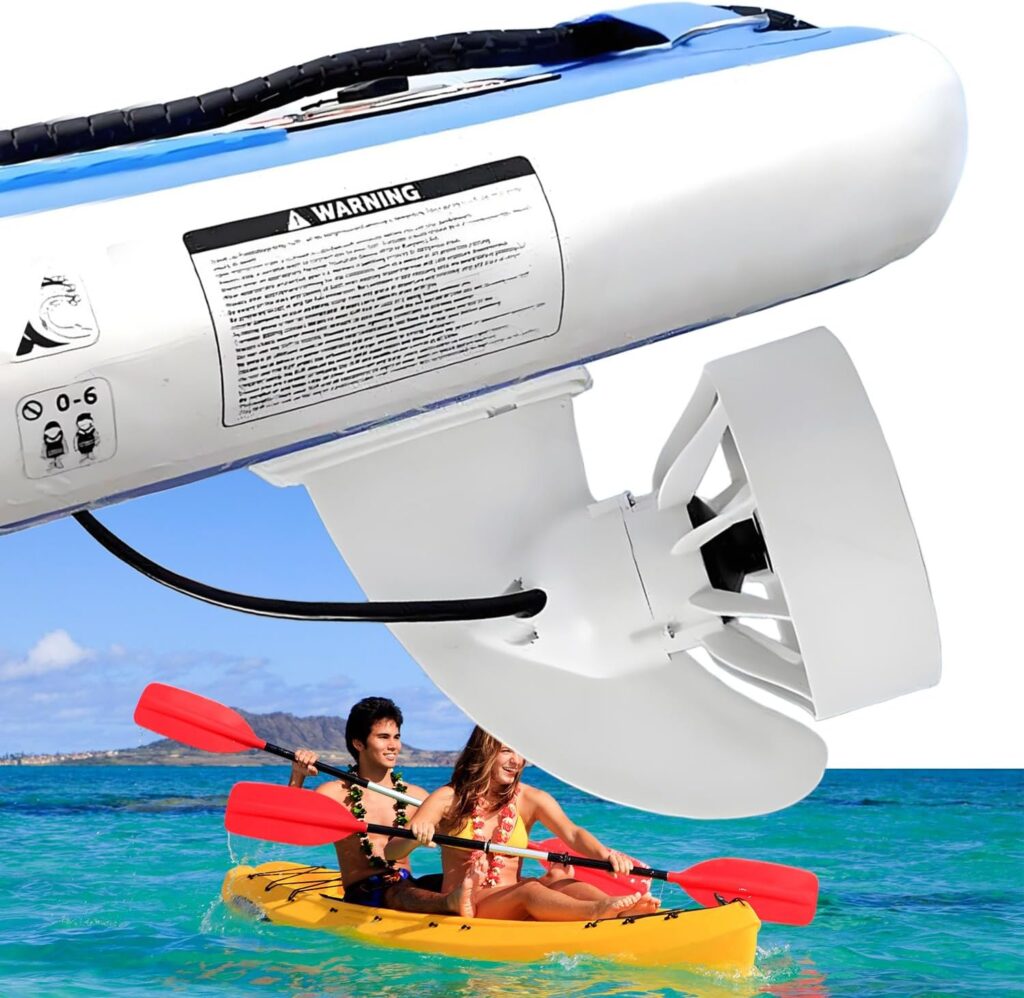
The best motorized electric fins for surfing from reputable manufacturers typically include a clear specification sheet listing motor wattage, battery capacity, and weight, exactly the documentation many registration authorities request. Here are some of the best:
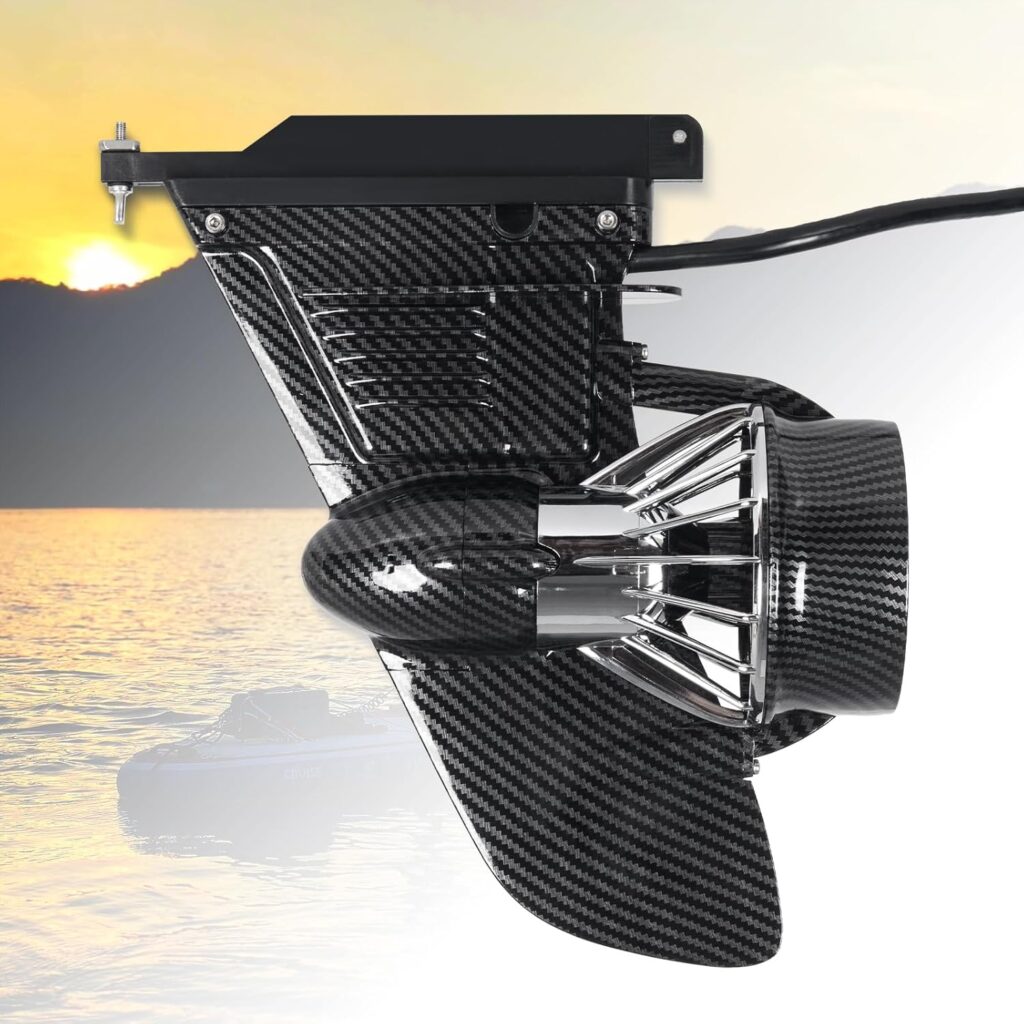
For full specs and a deeper breakdown of each model, see our complete guide to the best motorized electric fins for surfing and our explainer on how a motorized electric fin works.
Frequently Asked Questions
Do I need a license to use a motorized electric fin?
It depends entirely on your location. In New South Wales, Australia, jet-powered surfboards are legally classified as personal watercraft and require a PWC licence.
In several U.S. states, registration is required but a specific operator’s license may not be, depending on the device’s classification. Always confirm directly with your local maritime authority.
What happens if I use a motorized electric fin without registering it where required?
Penalties vary by jurisdiction but commonly include fines. In Texas, for example, operating an unregistered motorized vessel can result in penalties up to $500 per violation. Some jurisdictions may also confiscate equipment pending registration.
The safest approach is always to confirm requirements before your first session, not after an encounter with authorities.
Are motorized electric fins legal at all beaches, or just specific ones?
Even in regions where motorized electric fins are generally permitted, specific beaches, harbors, and marine protected areas frequently impose their own local restrictions, including outright bans, exclusion zones, or time-of-day restrictions.
Always check both the broader regional law and any posted local signage or harbor authority rules for your specific beach.
Does the size or power of the motor affect legality?
Often, yes. Several U.S. states regulate based purely on the presence of a motor regardless of size, while some jurisdictions create distinctions based on wattage or maximum speed.
A lower-powered fin (under 600W) may occasionally qualify for simplified categories, but this varies significantly by location and should never be assumed without direct confirmation.
Can customs or import laws affect bringing a motorized electric fin into a country?
Yes, in the United States, electric surfboard accessories including motorized fins have been formally classified by Customs and Border Protection under specific tariff classifications as goods put up in sets, which can affect import duties.
If you’re purchasing internationally, check both import regulations and your destination country’s on-water use rules separately, as they are governed by different authorities.
Is it legal to use a motorized electric fin in international or open ocean waters?
Maritime law in international waters is governed by different frameworks than coastal or inland regulations, and is generally far less restrictive for small personal devices.
However, the moment you launch from or return to a specific country’s coastline, that country’s domestic maritime law applies. Most recreational use happens well within territorial waters, where local regulations are fully in effect.
Do insurance requirements apply to motorized electric fins?
In jurisdictions that classify these devices as personal watercraft (such as NSW, Australia), insurance is not always legally mandatory but is strongly recommended given the same liability risks that apply to jet skis and small powered vessels.
Check with your local maritime authority and consider a watersports-specific insurance policy regardless of legal requirement.
Are there age restrictions for using a motorized electric fin?
Where these devices are legally classified as personal watercraft, age restrictions for PWC licences typically apply, for example, NSW requires riders to be at least 12 for a restricted licence and 16 for a full PWC licence.
Manufacturers also typically set their own minimum age recommendations independent of legal requirements, so check both.
How can I find out for certain if motorized electric fins are legal in my specific area?
Contact your local or state maritime authority directly: this is the only reliable source for current rules. In the U.S., this means your state’s DMV or Department of Natural Resources. In Australia, contact your state’s transport or maritime safety department.
In Europe, contact your national maritime or coastguard agency. General online guides, including this one, provide a strong starting framework, but regulations can change and local interpretation varies.
Will motorized electric fins eventually get clearer, dedicated regulations?
Very likely. The pattern seen with electric foil boards and jet-powered surfboards where ambiguity gradually resolved into clearer rules, as seen in NSW’s specific PWC classification suggests motorized electric fins will follow a similar regulatory path as the category grows in popularity.
Staying informed and riding responsibly in the meantime helps shape favorable future regulation.
The Bottom Line on Are Motorized Electric Fins Legal
So, are motorized electric fins legal? The honest, fact-checked answer is: it depends on where you are, and you need to check before you ride.
In places like New South Wales, Australia, the law is already specific, motorized surf devices are classified as personal watercraft requiring a licence. In several U.S. states, registration is required simply because the device has an electric motor, regardless of size.
In Switzerland, small motorized watercraft are banned outright. And in every competitive surfing event sanctioned by the WSL or ISA, motorized assistance of any kind is strictly prohibited.
The regulatory landscape is still young and actively evolving. Being an informed, responsible rider today is the best way to help shape clearer, fairer rules tomorrow.