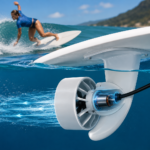
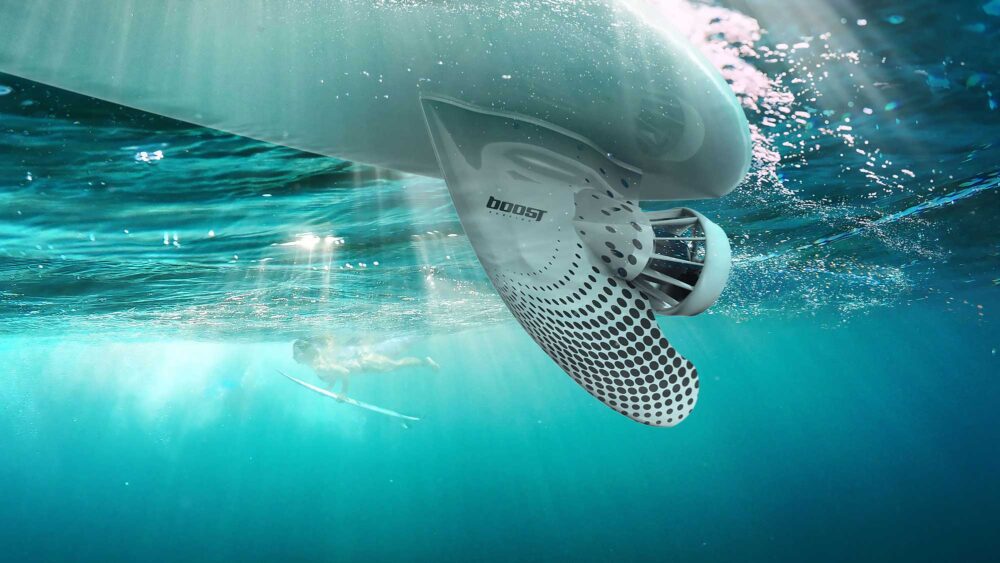
10 Best Motorized Electric Fins for Surfing
If you’ve been looking for a way to enjoy more time on the water, the best motorized electric fins for surfing have you covered.
Whether you’re a beginner trying to catch your first wave or a seasoned surfer looking to squeeze more sessions out of flat-water days, motorized electric fins have completely changed what’s possible on a board.
Think of a motorized electric fin as giving your surfboard a quiet, powerful heartbeat. Strap one in, hit the water, and suddenly paddling out doesn’t feel like a workout but freedom. These devices use rechargeable batteries and compact electric motors to push you through the water, extending your range, boosting your speed, and opening up spots you could never reach before.
Best Motorized Electric Fins for Surfing (E-fin)
The market for motorized electric fins has exploded in the last few years. Here are the standout options available today, covering a range of budgets and use cases.
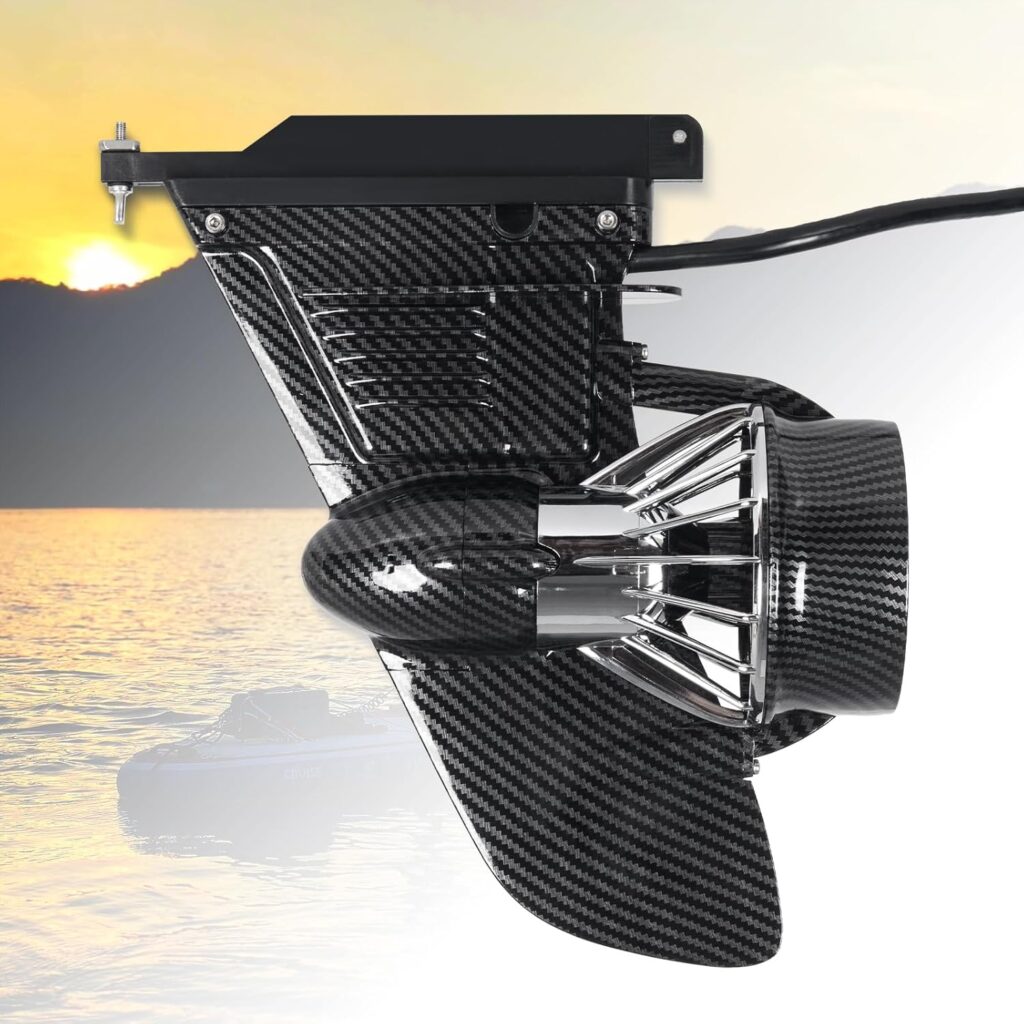
1. LEDONNE SUP Electric Fin Underwater Thruster
This fin feels built for riders who want extra push without turning their board into a heavy machine. The acceleration is smooth and predictable, especially in calmer water. It works well for long-distance paddle sessions and small-wave cruising.
Pros
- Strong low-end thrust that helps catch weaker waves earlier
- Surprisingly stable at medium speed
- Easy installation on most SUP and longboard fin boxes
- Remote response feels quick and reliable
- Battery life holds up well for casual sessions
Cons
- Top speed is not as aggressive as premium models
- Slight drag is noticeable when the motor is turned off
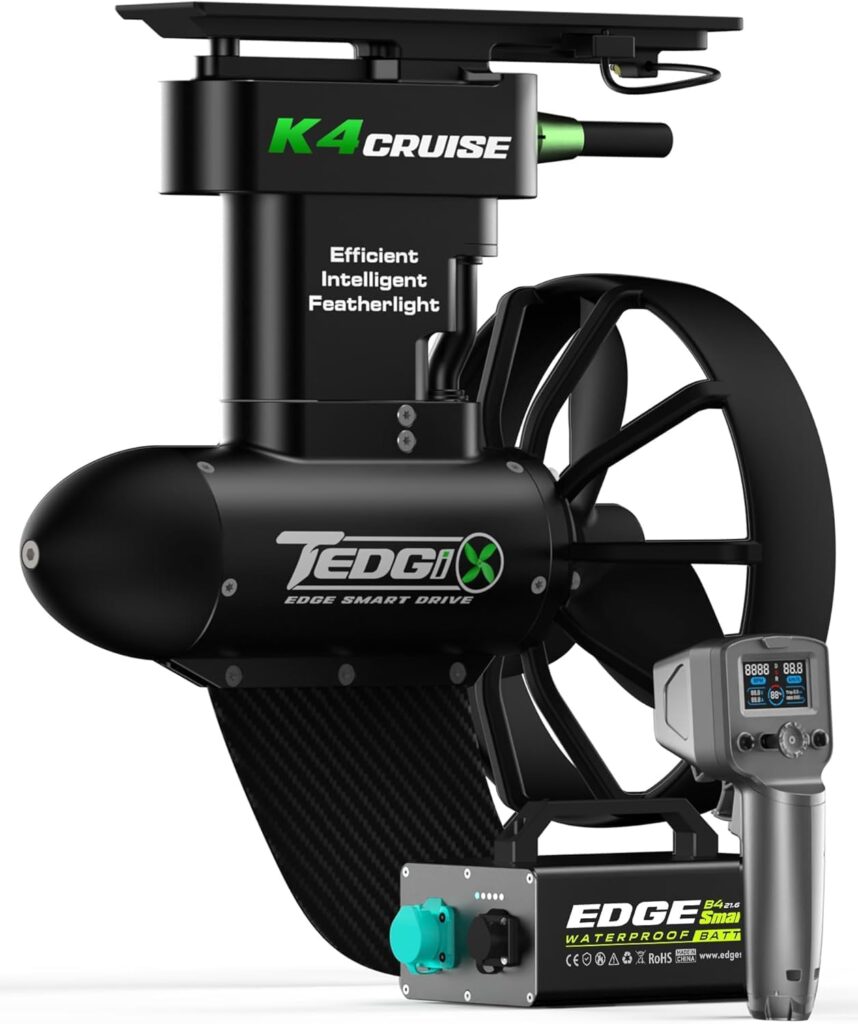
2. ParadisePad Edge K4 Kayak SUP Motor
The steering control on this unit makes it stand out immediately. It feels refined compared to many entry-level electric fins. Great for touring, long paddle sessions, and riders who want more control in open water.
Pros
- Steering system gives excellent maneuverability
- Quiet motor with very smooth power delivery
- Remote control is responsive even in choppy water
- Lightweight setup does not ruin board balance
- Battery efficiency is impressive for longer sessions
Cons
- More expensive than many similar options
- Learning the steering controls takes a little practice
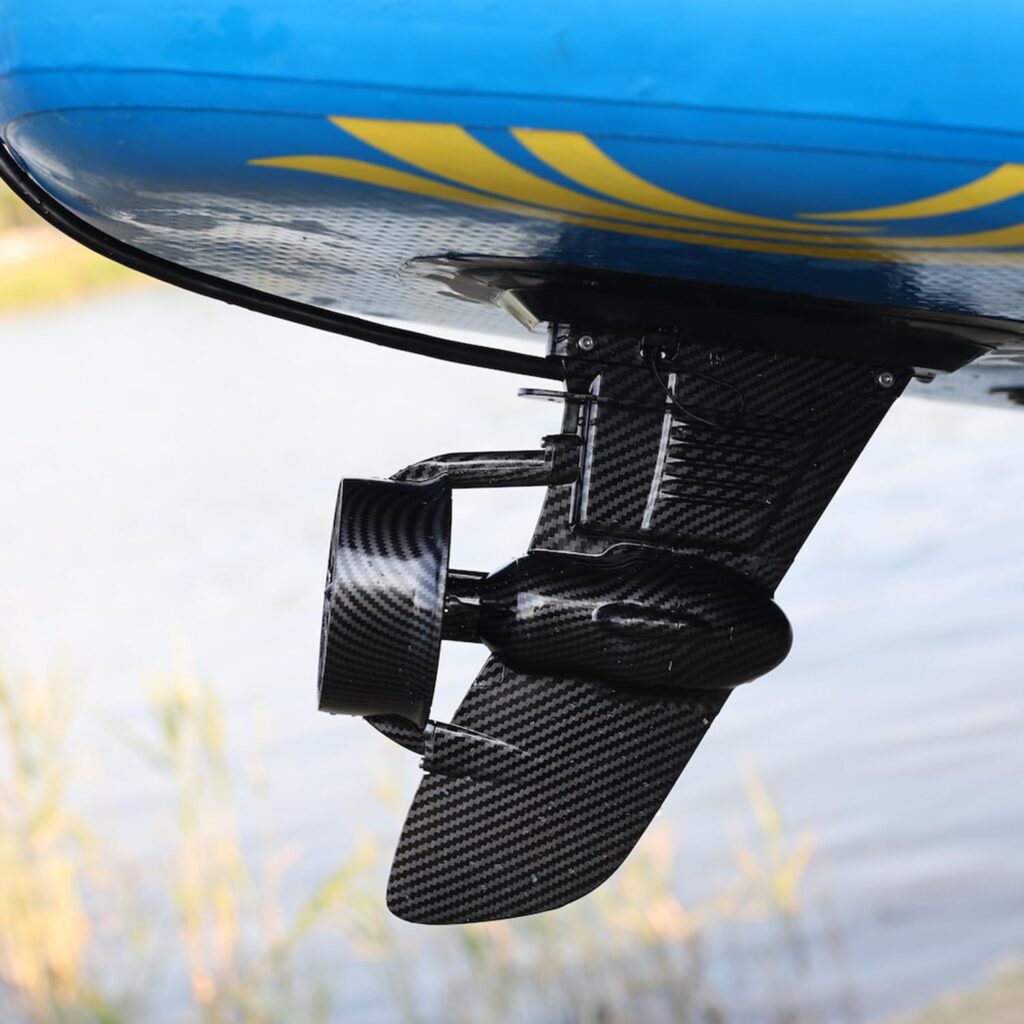
3. GEHPYYDS 24V Surfboard Electric Motorized Fin
This e-fin delivers a decent punch for recreational riders. The three-speed setup is useful when switching between flatwater cruising and wave entry assistance.
Pros
- Three speed modes make it versatile
- Good acceleration for the price range
- Remote is simple and easy to use
- Works well on both paddleboards and surfboards
- Compact design makes transport easier
Cons
- Build quality feels average in some areas
- Runtime drops quickly on the highest speed setting
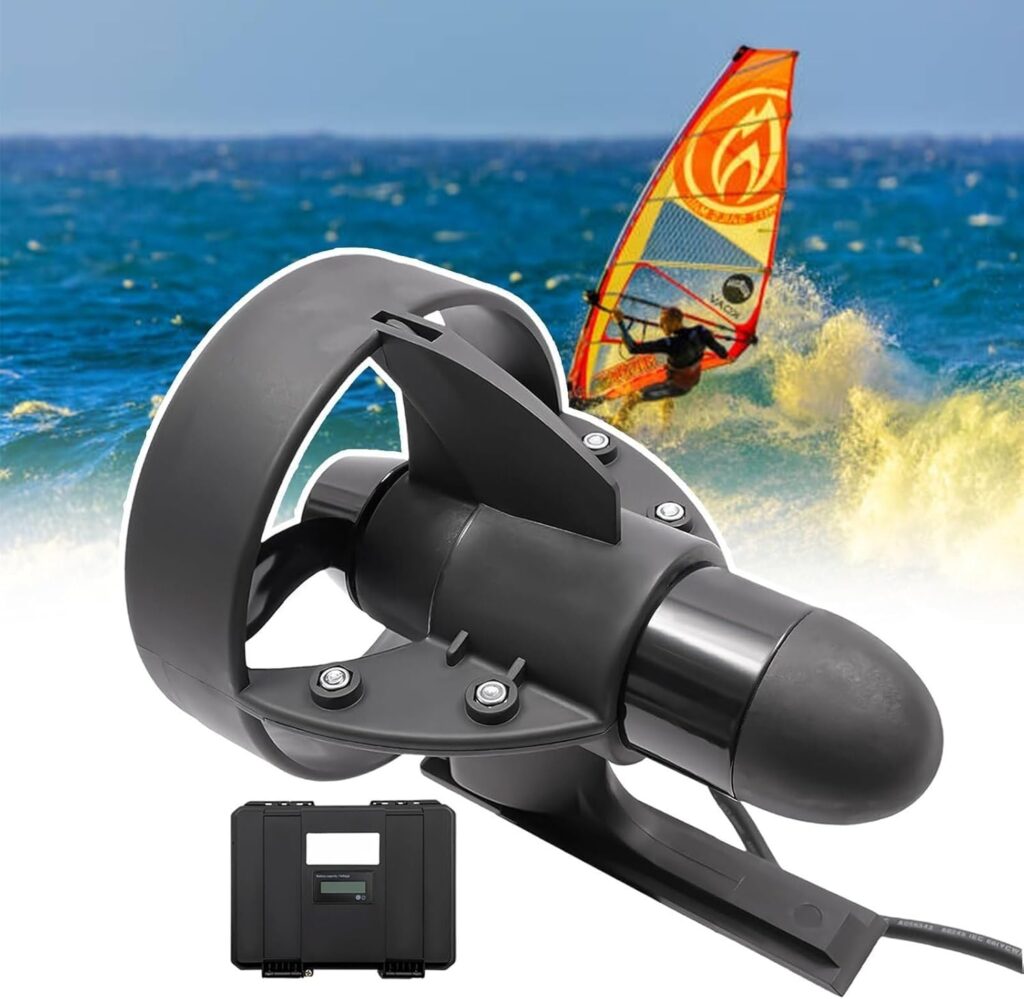
4. DJCDDM Electric Motorized Fin Surfboard
A practical setup for surfers who want basic electric assist without spending premium money. It is straightforward and gets the job done in mellow surf and flatwater conditions.
Pros
- Detachable design makes storage simple
- Decent thrust for beginner and intermediate riders
- Lightweight enough for smaller boards
- Easy installation process
- Stable performance in calm water
Cons
- Not ideal for rough surf conditions
- Remote casing could feel more durable
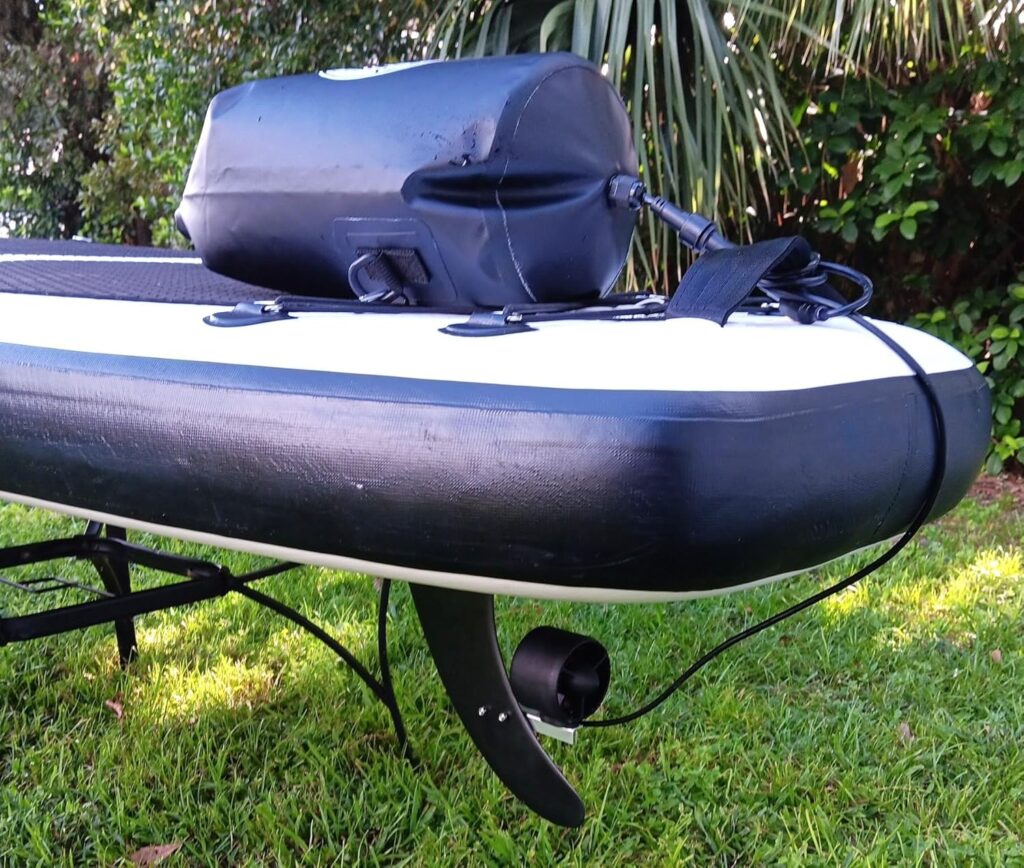
5. CuttleJet Mini V2 – Stand Up Paddle Board Motor Electric Fin Kit
This setup feels more polished than most compact electric fins. The waterproof battery bag is a smart touch, and the motor response feels natural instead of jerky. Excellent for long-distance SUP riders.
Pros
- Very clean and professional build quality
- Smooth acceleration that feels natural underfoot
- Waterproof battery system adds confidence offshore
- Remote connection stays reliable during long sessions
- Compact profile creates minimal drag
Cons
- Premium pricing compared to competitors
- Better suited for cruising than aggressive surfing
6. YQDDM Surfboard Electric Fin Electric Motorized Fin
This model has enough torque to help riders get moving quickly in flatter conditions. It feels more utility-focused than performance-focused, but still delivers solid assistance.
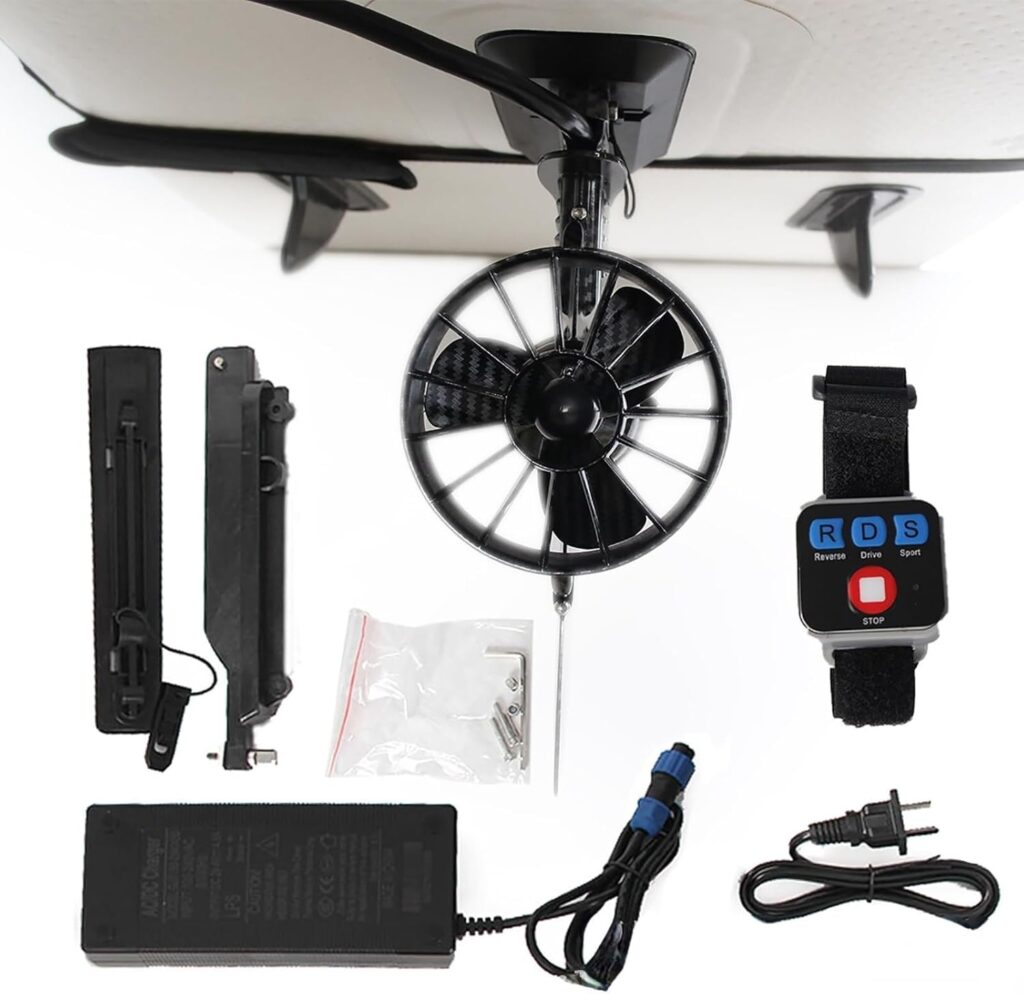
Pros
- Strong initial push from a standstill
- Helpful for beginners learning balance and paddling
- Remote is easy to understand
- Works across several board styles
- Reasonably good battery performance
Cons
- Motor noise is more noticeable than expected
- Added weight affects maneuverability slightly
7. Electric Surfboard Fins Underwater Thruster for Paddleboard and Kayak
The speed potential here is impressive for a universal fin system. Riders looking for longer runtime options will appreciate the flexibility between battery setups.
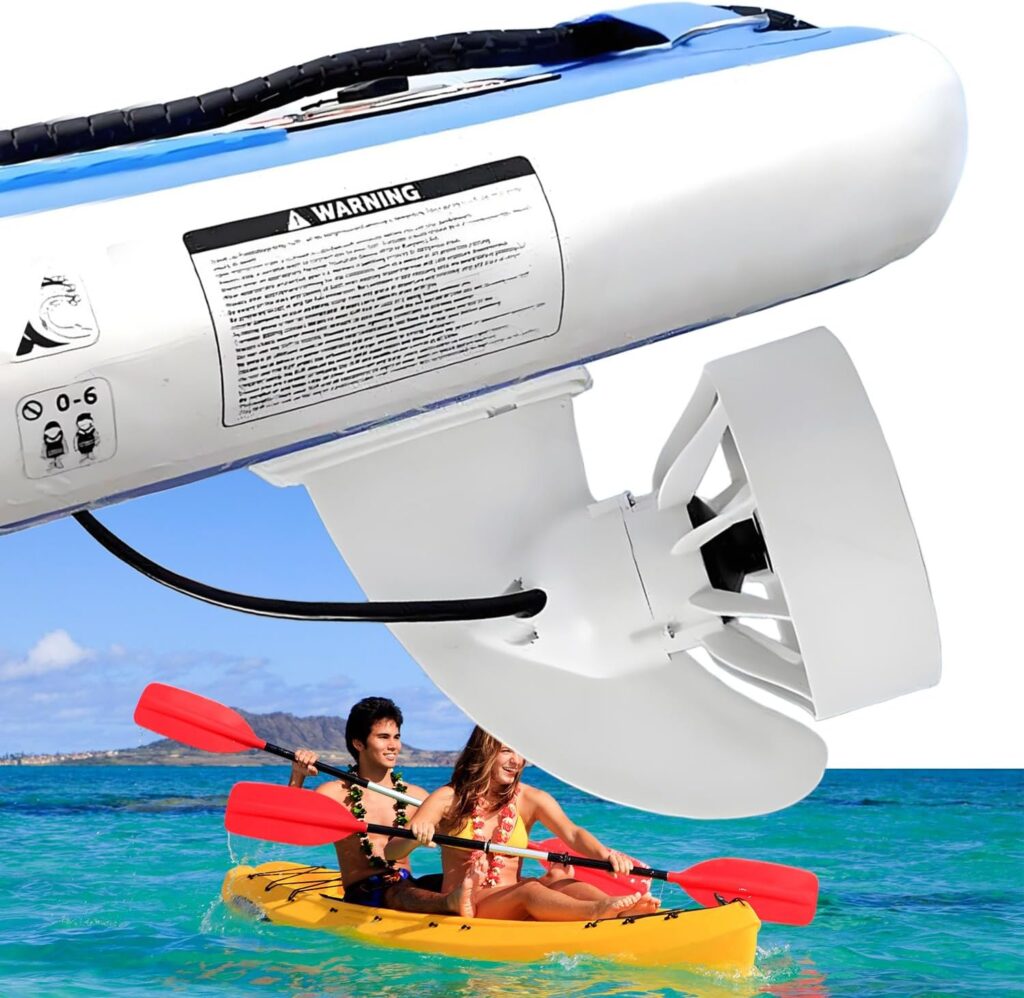
Pros
- Excellent speed capability for open-water runs
- Multiple battery options improve versatility
- Brushless motor runs efficiently
- Works well on kayaks and larger paddleboards
- Good runtime at lower cruising speeds
Cons
- High-speed handling can feel twitchy
- Bulkier than dedicated surf-focused systems
8. Generic Electric Underwater Thruster
This is more of a casual recreational motor than a hardcore surf tool. It performs best in calm water and relaxed paddle sessions.
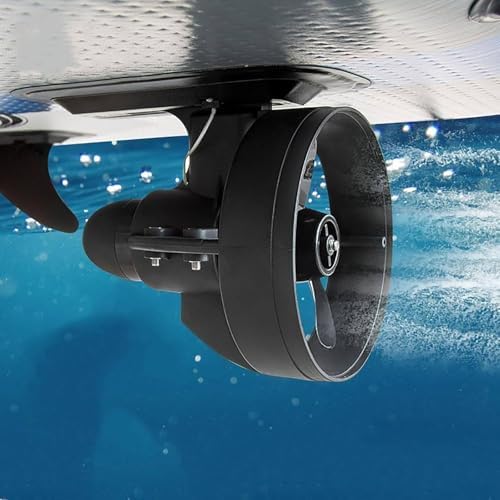
Pros
- Affordable entry point for electric fin users
- Simple controls with minimal setup
- Lightweight and portable
- Good for short-distance cruising
- Recharge system is straightforward
Cons
- Limited power compared to stronger motors
- Not suitable for larger waves or strong currents
9. Kindevieft Electric Motorized Fin
The 360W motor gives this setup a bit more authority in the water. It feels capable enough for riders who want stronger propulsion without jumping into high-end pricing.
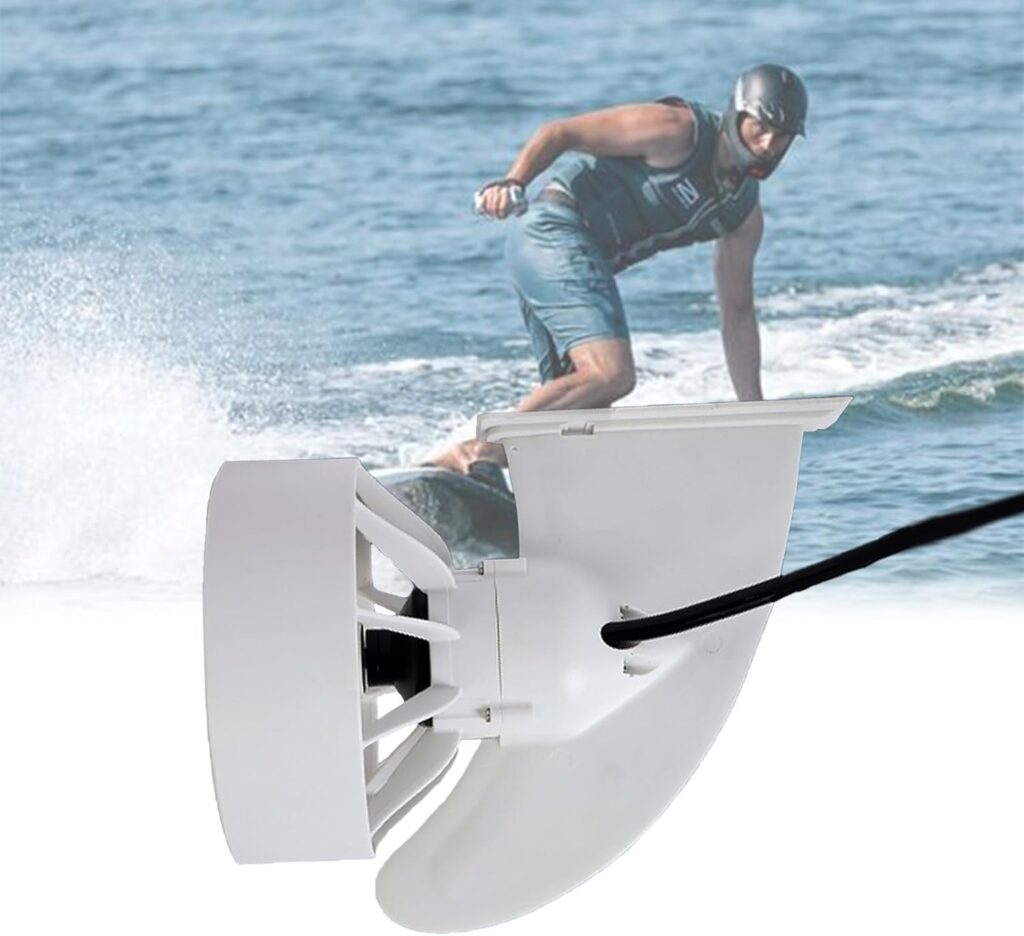
Pros
- Strong brushless motor performance
- Smooth cruising speed with decent stability
- Remote response is reliable
- Good all-around versatility for SUP and surf use
- Durable propeller housing design
Cons
- Slightly heavier than competing models
- Installation instructions could be clearer
10. Generic 380W Electric Surfboard Fins Propeller
This one has serious thrust for riders who enjoy speed-assisted sessions. It leans more toward utility and exploration than pure surfing performance, but it definitely has power.
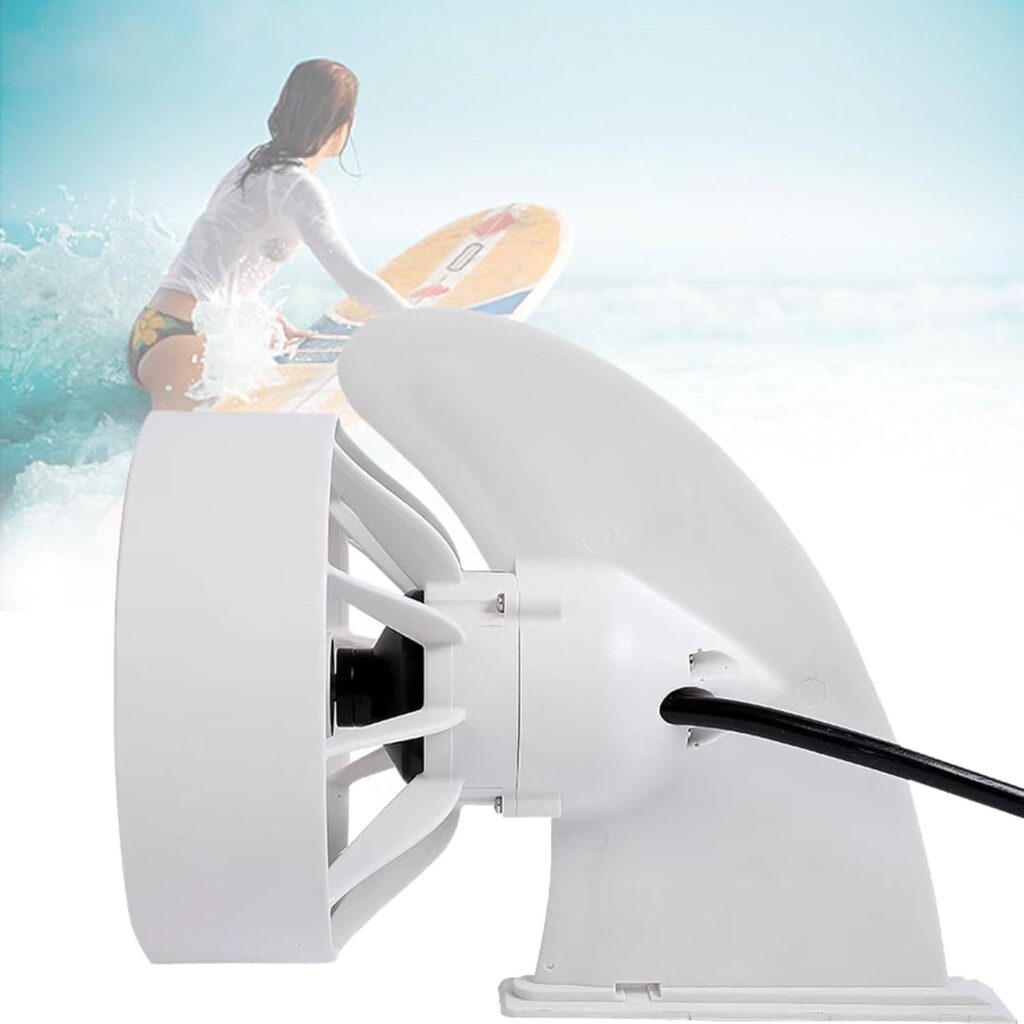
Pros
- Powerful acceleration for larger boards
- Strong motor handles longer sessions well
- Performs well in flatwater and coastal cruising
- Brushless setup feels efficient and smooth
- Useful for fishing kayaks and touring boards too
Cons
- Extra power adds noticeable battery weight
- Less agile during sharp surf maneuvers
How Does a Motorized Electric Fin Work?
A motorized electric fin looks a lot like a standard surfboard fin from the outside, but inside, it houses a compact brushless electric motor, a rechargeable lithium-ion battery pack, and a propeller system, all sealed in a waterproof casing.
Here’s the basic flow of how it works:
- Power up: You charge the fin using a USB-C or proprietary charger, similar to charging a phone or power bank.
- Insert into your board: The motorized electric fin slides into your board’s standard fin box, most are designed to fit FCS II or Futures boxes, the two most common fin systems in the world.
- Activate: Most fins are controlled via a handheld wireless remote, a wristband controller, or even a pressure-sensitive foot trigger built into the fin. You squeeze, press, or tilt and the motor engage.
- Propulsion: The internal propeller spins at high speed, creating thrust that pushes the board forward through the water, just like a tiny, silent outboard motor attached to the bottom of your surfboard.
- Ride and steer: You still use your body weight, leash, and natural surfing motion to steer and control the board. The fin just handles the heavy lifting of propulsion.
The motors in today’s best motorized electric fins for surfing typically generate between 400W and 1,200W of power, and the propellers are precision-engineered to minimize drag when the motor is off so you can still surf waves naturally without it feeling like you’re dragging a brick through the water.
Battery technology has improved enormously in recent years. Where early models barely lasted 30 minutes, modern motorized electric fins can power sessions lasting 45 minutes to 2 hours, depending on the speed setting, water conditions, and rider weight.
| Quick Fact: Most motorized electric fins are completely waterproof to depths of 30–50 meters, and the motors are designed to operate silently so you won’t disturb wildlife or fellow surfers while riding. |
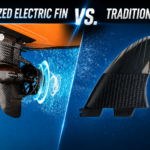
Motorized Electric Fin vs. Traditional Fin: Which One Is Right for You?
This is one of the most common debates in the surfing community right now. And honestly, both sides have strong arguments. Let’s lay it all out clearly so you can decide what works best for your style, budget, and surfing goals.
The Case for Motorized Electric Fins
The best motorized electric fins for surfing shine brightest in specific situations. If you surf in areas with weak or inconsistent swells, a motorized electric fin gives you propulsion even when the ocean isn’t cooperating.
It’s also a game-changer for paddlers who are recovering from injuries, older surfers who want to extend their time in the water, or beginners who struggle with the stamina needed to paddle back out after every wave.
Beyond physical assistance, motorized fins let you explore. Want to paddle out to a break a kilometer from shore? No problem. Want to surf a calm lake or flat bay? A motorized electric fin makes it possible when natural waves don’t exist.
The Case for Traditional Fins
Traditional fins are beautifully simple. They cost a fraction of the price, require zero maintenance beyond rinsing, and give you total feedback from the water.
Competitive surfers, especially in events and performance surfing, almost universally prefer traditional fins because the direct connection to the ocean is part of the skill and the experience.
Traditional fins also have no battery life limits, no charging requirements, and no risk of malfunction mid-session.
For performance wave surfing, especially in punchy, fast conditions, a traditional fin often outperforms motorized alternatives because the surfer’s technique, not the motor, is doing the work.
Head-to-Head Comparison: Motorized Electric Fin vs. Traditional Fin
| Feature | Motorized Electric Fin | Traditional Fin |
| Power Source | Built-in battery (rechargeable) | None — human-powered only |
| Speed Boost | Up to 15+ km/h additional thrust | Depends entirely on paddling |
| Battery Life | 45–120 minutes per charge | Unlimited (no battery) |
| Weight | Heavier (motor + battery) | Lightweight and simple |
| Cost | $500–$2,500+ | $20–$300 |
| Best For | Flat water, beginners, long sessions | All wave types, experienced surfers |
| Maintenance | Requires charging, waterproofing care | Minimal — rinse and store |
| Learning Curve | Easy to get extra propulsion | Technique-dependent |
| Eco Impact | Zero emissions while riding | Zero emissions |
The verdict? If you surf primarily for performance and wave riding in good conditions, a quality traditional fin remains the gold standard. But if you want extended range, flat-water capability, easier sessions, or simply a new way to experience the ocean, the best motorized electric fins for surfing are absolutely worth the investment.
Are Motorized Electric Fins Legal?
This is a critical question and the honest answer is: it depends on where you are and where you surf.
Motorized electric fins exist in a grey area in many parts of the world. Surf competitions governed by organizations like the World Surf League (WSL) and the International Surfing Association (ISA) prohibit motorized assistance in competitive events.
So, if you’re entering a surfing competition, a motorized electric fin is almost certainly not allowed.
But for recreational surfing? The rules vary significantly by location.
United States
In the United States, there is no single federal law governing motorized surfboard fins. However, several states and local jurisdictions regulate motorized watercraft, and some surf spots have their own rules enforced by beach authorities or local ordinances.
In California, for example, certain protected marine areas prohibit motorized watercraft of any kind which may include motorized fins depending on interpretation.
Always check with your local beach authority, surf club, or maritime authority before taking a motorized electric fin into the water for the first time.
Australia
Australia’s maritime safety authorities classify watercraft by their propulsion system. In some states, any motorized watercraft, including a surfboard with a motorized fin may require registration or a license to operate.
New South Wales and Queensland, where surf culture is deeply embedded, have ongoing discussions about how to regulate these emerging devices. Until clear national guidelines are established, it’s best to check with your state’s maritime authority.
Europe
European regulations vary by country. In France, Germany, and the Netherlands, motorized personal watercraft often require registration and insurance.
The UK’s Maritime and Coastguard Agency (MCA) has been reviewing rules around personal electric watercraft, including motorized fins. Again, checking locally is essential.
General Legal Advice
| Important: The safest approach is to treat your motorized electric fin like any motorized watercraft. Check local regulations, respect no-motor zones, always carry your fin’s documentation (proof of purchase, specs), and use common sense in crowded or protected areas. Most authorities will appreciate responsible use. |
As motorized electric fins grow in popularity, legislation will catch up. Several advocacy groups are already working with water sports authorities to establish clear, fair guidelines for recreational use. The sport is young, be a responsible ambassador for it.
What to Look for When Buying a Motorized Electric Fin
With so many options available, knowing what matters most will save you money and frustration. Here’s what separates the best motorized electric fins for surfing from the rest.
1. Compatibility with Your Board
Not all fins fit all boards. Most motorized electric fins are designed for FCS II or Futures fin boxes, the two dominant systems globally. Before you buy, check what fin box system your board uses. Some boards use single-fin boxes or older systems that may require an adapter.
2. Battery Life and Charging Time
Longer battery life sounds appealing, but it usually comes with a heavier fin. Think about how long your typical surf session is. If you surf for 45 minutes at a time, a 60-minute battery life is plenty.
If you do multi-hour ocean tours, look for fins in the 90–120-minute range and always carry a spare battery pack if possible.
3. Motor Power Output
Measured in watts, motor power determines how much thrust the fin generates. For casual surfing and flat water, 400–600W is sufficient. For ocean touring, handling currents, or heavier riders, look for fins with 800W or more.
The best motorized electric fins for surfing balance power with battery efficiency so, pure output isn’t everything.
4. Waterproofing and Build Quality
Your fin will be submerged constantly. Look for an IP68 waterproofing rating as a minimum. This means the device can handle being submerged at depth for extended periods.
Also check the material quality of the casing: marine-grade ABS plastic and carbon fiber composites are the most durable choices.
5. Control System
Wrist remote controls are the most popular and intuitive, they let you adjust speed without changing your paddling posture. Some fins use Bluetooth-connected apps, which is great for data tracking but less practical mid-session. Pressure-trigger systems built into the fin are elegant but have a learning curve.
6. Propeller Safety
Always choose a motorized electric fin with a shrouded or guarded propeller. Open propellers are dangerous in crowded water and can injure swimmers, marine life, or yourself. The best models use enclosed duct systems that protect the propeller entirely.
7. Noise Level
Electric motors are generally quiet, but not all are equal. Brushless motors used in the best motorized electric fins for surfing are significantly quieter than brushed motors and more energy-efficient too.
If noise is a concern for your environment (protected nature areas, shared breaks), prioritize brushless motor models.
Frequently Asked Questions About Best Motorized Electric Fins for Surfing
How Fast Can A Motorized Electric Fin Make You Go?
Most fins provide an assisted top speed of 10–20 km/h depending on the model, motor power, and water conditions. Keep in mind this is the fin’s contribution, your paddling, wave energy, and body position all factor into your total speed.
Can I Use A Motorized Electric Fin On Any Surfboard?
Generally yes, as long as your board has a compatible fin box typically FCS II or Futures. Single-fin boards can also work with the right adapter. Check the manufacturer’s compatibility specs before purchasing.
Are Motorized Electric Fins Safe?
Yes, when used responsibly. Always choose models with enclosed propellers, auto-cutoff safety features, and proper waterproofing. Follow local maritime rules, avoid crowded swim areas, and always wear a leash. The best motorized electric fins for surfing are built with safety as a design priority.
How Long Does It Take To Charge A Motorized Electric Fin?
Depending on the model and battery size, most fins charge fully in 2–4 hours using their included charger. Some premium models support fast-charging and can reach 80% in under 90 minutes.
Can A Motorized Electric Fin Be Used In Saltwater?
Absolutely and most are designed specifically for saltwater environments. Look for fins with marine-grade sealing and stainless steel or corrosion-resistant hardware. Always rinse your fin thoroughly with fresh water after each saltwater session to extend its lifespan.
Do Motorized Electric Fins Work On A SUP Board?
Yes, and they work exceptionally well. Stand-up paddleboarding with a motorized electric fin is one of the fastest-growing uses. The fin provides propulsion, letting paddlers cover more ground with less effort. Ideal for touring, fishing, or exploring coastlines.
Are Motorized Electric Fins Waterproof?
All reputable motorized electric fins are waterproof. Look for a minimum of IP67 rating (protected against temporary immersion) or IP68 (protected against continuous immersion at depth). Never use a fin without a confirmed waterproof rating.
Can Beginners Use A Motorized Electric Fin?
Not only can they, beginners are arguably the group that benefits most. A motorized electric fin reduces the physical demand of paddling out, making surf sessions less exhausting and more fun for those still building their fitness and technique.
What Is The Average Lifespan Of A Motorized Electric Fin?
With proper care, most quality motorized electric fins last 3–7 years. Battery cells typically degrade after 500–1,000 charge cycles (roughly 2–4 years of regular use), but many manufacturers offer replacement battery packs. Motors and casings tend to outlast the battery significantly.
How Much Do Motorized Electric Fins Cost?
Entry-level models start around $500 and can reach $2,500 or more for high-performance fins. Mid-range options between $900 and $1,500 tend to offer the best balance of performance, battery life, and durability for most surfers.
Can I Travel With A Motorized Electric Fin?
Yes, but with important caveats. The lithium-ion batteries inside motorized electric fins are subject to airline regulations. In most cases, batteries must be carried in your carry-on luggage, not checked bags, and must meet the airline’s watt-hour limits (typically 100–160 Wh per battery). Always check your airline’s specific policy before traveling.
How to Maintain Your Motorized Electric Fin
Owning one of the best motorized electric fins for surfing is a commitment, not just a purchase. Here’s how to keep it running perfectly season after season.
- Rinse with fresh water after every saltwater session. This prevents corrosion and keeps seals in good shape.
- Charge the battery before storing. Storing a completely dead lithium battery accelerates degradation.
- Inspect the propeller and housing after every 10 sessions. Check for cracks, debris, or wear.
- Store in a padded case away from direct sunlight. UV exposure can degrade plastic casings over time.
- Check seal integrity every 3–6 months. O-rings and gaskets should be inspected and replaced if showing signs of wear.
- Update firmware if available. Some smart fins receive performance and safety updates via app.
Who Should Buy a Motorized Electric Fin?
The best motorized electric fins for surfing aren’t for everyone but they’re for more people than you might think. Here’s a quick guide:
- Beginners: If paddling out exhausts you before you’ve caught a single wave, a motorized fin is a genuine game-changer.
- Older surfers: Maintain your time in the water and your love for the ocean without the physical toll.
- Injured surfers: Recovery sessions are possible when paddling isn’t. The fin handles propulsion while you focus on balance.
- Adventure surfers and explorers: Reach remote breaks and coastal spots that are simply unreachable under paddle power alone.
- SUP enthusiasts: Cover vastly more distance per session and open up touring routes you’ve only dreamed of.
- Tech lovers: If you love innovative gear, a smart motorized fin with app connectivity and performance data is endlessly fascinating.
Performance wave riders who surf strong breaks and compete should probably hold off for now. But the gap between motorized and traditional performance is closing fast.
The Bottom Line on Best Motorized Electric Fins for Surfing
The best motorized electric fins for surfing represent one of the most exciting innovations in water sports in the last decade like e-foil. They’re practical, increasingly affordable, well-engineered, and genuinely capable of transforming your experience on the water whether you’re a first-timer learning to paddle or a seasoned surfer exploring new territory.
Understanding how a motorized electric fin works helps you use it more effectively and take better care of it. Knowing the differences in a motorized electric fin vs. traditional fin debate helps you make smarter buying decisions. And understanding where and whether motorized electric fins are legal protects you and keeps the sport on good terms with local authorities.
The technology is mature enough to invest in today, and it’s only going to get better. Longer battery life, lighter housings, quieter motors, smarter controls, the next generation of motorized electric fins is already in development labs around the world.