How Does a Motorized Electric Fin Work?
Wondering how does a motorized electric fin work? At first glance, it looks like a regular surfboard fin.
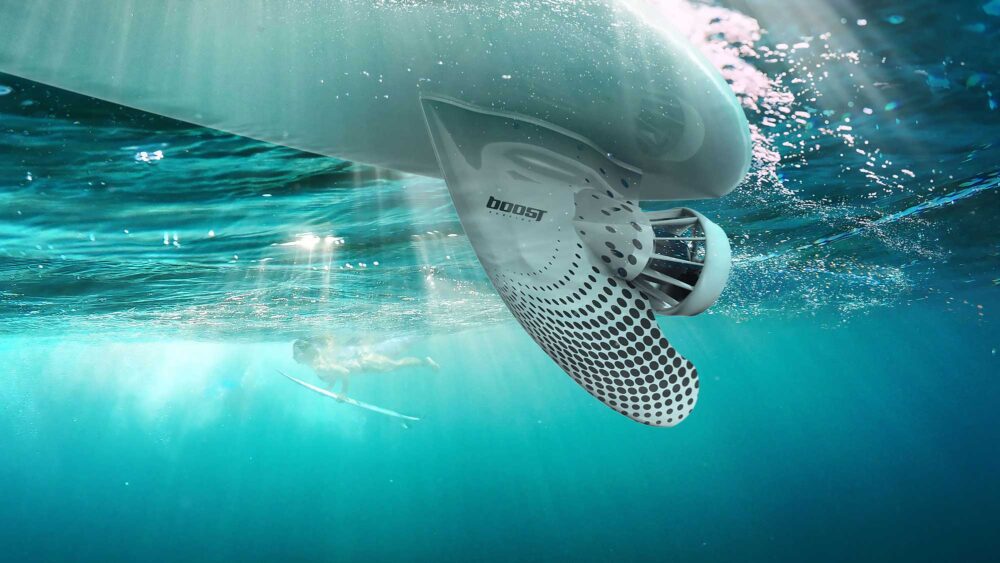
But hidden inside that sleek, hydrodynamic shell is a brushless electric motor, a rechargeable lithium-ion battery, a precision propeller, and smart electronics that work together to push you through the water with quiet, effortless power.
Think about how a ceiling fan works; electricity spins the blades, and the blades move air. Now shrink that down, make it waterproof, seal it inside a surfboard fin, and flip it underwater. Instead of moving air, it moves water and that moving water pushes your board forward.
That’s the beautiful simplicity at the heart of a motorized electric fin. No combustion engine, no fuel, no noise. Just a clean, silent thrust that feels almost magical the first time you feel it under your feet.
What Exactly Is a Motorized Electric Fin?
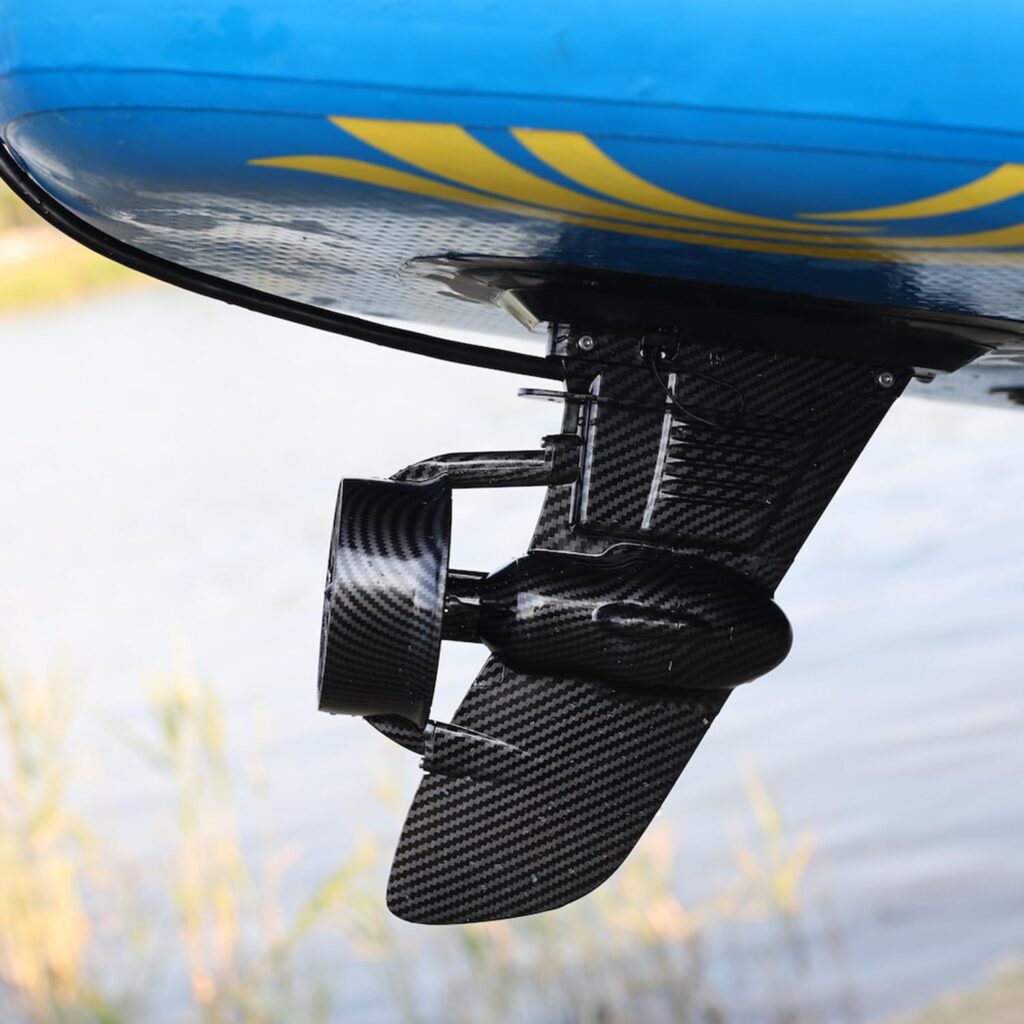
Before getting into how a motorized electric fin works, it helps to understand what it actually is. A motorized electric fin is a self-propelled surfboard fin that contains a built-in electric motor, battery, and propulsion system, all sealed inside a waterproof housing designed to fit standard surfboard fin boxes.
It looks and mounts just like a regular fin. From above the waterline, nobody can even tell your board is motorized. But beneath the surface, it’s doing the work of a small marine motor, silently generating thrust that moves your board through the water without paddling.
The concept bridges the gap between a traditional surfboard and a motorized watercraft. You still surf, steer, and balance like a normal surfer. But the fin handles propulsion, which means less paddling fatigue, more time on the water, and access to spots and conditions you simply couldn’t reach before.
| Quick Fact: Most motorized electric fins weigh between 0.8 kg and 2.1 kg heavier than a traditional fin, but light enough that you barely notice the difference once you’re in the water. |
How Does a Motorized Electric Fin Work? The Step-by-Step Breakdown
So, how does a motorized electric fin work when you actually ride it? Let’s walk through the full process from charge to splash.
Step 1 — Charging the Battery
Everything starts with the battery. Motorized electric fins use lithium-ion (Li-ion) or lithium polymer (LiPo) battery cells, the same technology used in electric cars, drones, and smartphones.
These batteries are compact, hold significant energy, and recharge hundreds of times before degrading.
Most fins charge via a USB-C port or a proprietary magnetic charging connector built into the fin’s waterproof housing. A full charge typically takes 2–4 hours and provides 45 to 120 minutes of runtime depending on the power setting and conditions.
Step 2 — Installing the Fin
Charging is done, then you slot the fin into your surfboard’s fin box. Most motorized electric fins are engineered to fit FCS II or Futures fin boxes, the two most widely used systems on surfboards globally.
A stainless steel or reinforced polymer connector locks the fin securely in place, just like any standard fin.
Some models require a specific fin box adapter for single-fin or older box systems. Always check compatibility before purchasing.
Step 3 — Pairing the Controller
Here’s where it gets clever. The fin communicates wirelessly with a handheld controller, usually via Bluetooth or RF (radio frequency) signal. The controller is typically a small wrist-worn device or a compact remote you clip to your leash or wrist strap.
On first use, you pair the controller to the fin through a quick sync process similar to pairing wireless earbuds to a phone. Once paired, the connection is instant every session.
Step 4 — The Motor Engages
When you squeeze the trigger or press the control button, the Electronic Speed Controller (ESC), a small but critical circuit board inside the fin receives the signal and regulates the flow of power from the battery to the brushless electric motor.
The brushless motor uses electromagnetic fields created by copper wire coils and permanent rare-earth magnets to spin a central shaft at high RPM.
Unlike brushed motors, brushless motors have no physical contact points that wear down, making them more efficient, quieter, and longer-lasting. This is the same motor technology used in high-performance drones and electric bicycles.
Step 5 — The Propeller Creates Thrust
The spinning motor shaft connects directly to the propeller, a precision-engineered blade typically made from carbon fiber or marine-grade ABS plastic.
As the propeller spins, it draws water in from one side and expels it forcefully from the other, generating forward thrust by Newton’s third law: for every action, there’s an equal and opposite reaction.
Most motorized electric fins use a ducted propeller design, meaning the propeller spins inside a protective shroud or duct. This does two things: it improves efficiency by channeling water flow more precisely, and it protects the propeller blades (and nearby swimmers) from contact.
Step 6 — You Ride
With the motor running, how does a motorized electric fin work in terms of the actual riding experience? Smoothly and intuitively. You still steer with your body weight, leaning left or right, shifting forward or back, just like normal surfing. The fin doesn’t control direction. It just controls speed.
Most controllers offer multiple speed settings, typically Eco, Medium, High, and Burst, letting you dial in exactly how much assist you want. In Eco mode, the fin gives you a gentle push that supplements your paddling.
In Boost mode, the board accelerates powerfully with the kind of thrust that will make you grin uncontrollably.
Step 7 — The Safety System Activates If You Fall
Every quality motorized electric fin includes a safety cut-off mechanism. If you fall off the board, which happens to everyone, the connection between the leash-mounted remote and the fin breaks, and the motor stops immediately.
Some systems use a magnetic wrist strap that physically disconnects when pulled. Others detect signal loss and cut power within milliseconds.
This is a non-negotiable safety feature. Always confirm your fin has it before buying.
| How Does a Motorized Electric Fin Work in Reverse? Most fins don’t offer reverse thrust; they’re designed for forward propulsion only. A few premium models include a reverse mode for maneuvering in tight spaces like docks or shallow entry points, but this is not standard. |
Anatomy of a Motorized Electric Fin: All Components Explained
Now that you understand the process, here’s a complete breakdown of every component inside a motorized electric fin and what each one does.
| Component | Material / Type | What It Does |
| Brushless Electric Motor | Copper windings, rare-earth magnets | Converts electrical energy into rotational force to spin the propeller |
| Lithium-Ion Battery Pack | Li-ion or LiPo cells, 36V–48V | Stores and delivers power; lasts 45–120 min per charge cycle |
| Propeller / Impeller | Carbon fiber or marine-grade ABS | Converts motor rotation into forward water thrust |
| Waterproof Housing | Marine ABS, carbon fiber composite | Seals all internal components to IP67/IP68 standard |
| Electronic Speed Controller (ESC) | Printed circuit board (PCB) | Regulates power delivery from battery to motor for smooth acceleration |
| Wireless Remote / Controller | Bluetooth or RF signal | Lets the rider adjust speed hands-free from the board |
| Safety Cut-Off System | Magnetic or signal-based sensor | Immediately stops the motor if the rider falls off |
| Fin Box Connector | Stainless steel or reinforced polymer | Locks the fin securely into FCS II or Futures fin box on the board |
Power, Speed, and Battery Life: The Numbers That Matter
Understanding how a motorized electric fin works in terms of real-world performance means looking at the numbers. Here’s what to expect across different power settings.
| Power Setting | Approx. Speed | Battery Draw | Best Used For |
| Eco / Low | 5–8 km/h | Low (~10–15W) | Touring, casual paddling |
| Medium | 10–14 km/h | Moderate (~30–50W) | General surfing, flat water |
| High / Boost | 15–20 km/h | High (~80–120W) | Racing, strong currents |
| Burst / Max | 20+ km/h | Very high (~150W+) | Short-distance sprint only |
Battery capacity is measured in watt-hours (Wh). Most motorized electric fins carry batteries between 50Wh and 150Wh. For reference, a typical smartphone battery is about 15Wh so even the smallest fin battery packs significant energy.
Rider weight, water conditions, current direction, and speed setting all impact how long the battery lasts in real-world use.
Motorized Electric Fin vs. Traditional Fin: How the Technology Compares
A common question once people understand how a motorized electric fin works is: how does it actually change the experience compared to a traditional fin? The differences are more nuanced than you might expect.
What a Traditional Fin Does
A traditional fin is purely hydrodynamic. It has no moving parts, no electronics, and no power source. Its job is to provide lateral resistance in the water, preventing the board from sliding sideways and giving the surfer directional control.
The fin’s shape, size, and flex pattern determine how the board handles how it pivots on waves, how stable it feels at speed, how quickly it can be redirected.
Traditional fins are masterpieces of simplicity. A good fin made from fiberglass, carbon fiber, or honeycomb composite can last decades and perform flawlessly in any condition. There’s nothing to charge, nothing to break, and nothing standing between you and pure surfing feel.
What a Motorized Electric Fin Adds
A motorized electric fin does everything a traditional fin does plus it adds active propulsion. The hydrodynamic shape still provides directional stability. But now the fin is also generating thrust, transforming your board from a wave-dependent vehicle into one you can power yourself.
This shift has profound implications. In the motorized electric fin vs. traditional fin debate, it comes down to what you’re trying to do. Motorized fins win decisively when it comes to flat-water performance, paddling assistance, and endurance.
Traditional fins win when pure wave performance, competition eligibility, and simplicity are priorities.
The Riding Feel Difference
Here’s something that surprises most first-time users: when the motor is off, a motorized electric fin feels almost identical to a traditional fin.
The slight added weight is noticeable under the arm, but once you’re riding, it largely disappears. The ducted propeller design minimizes drag significantly compared to early motorized fin prototypes.
When the motor turns on, the sensation is a smooth, progressive acceleration, not a jarring lurch. Good electric motor management (via the ESC) ensures power delivery feels natural and predictable.
| Pro Tip: If you’re comparing a motorized electric fin vs. traditional fin for your first board purchase, consider this: a motorized fin can always be turned off and ridden passively, giving you both options in one device. A traditional fin can never be turned on. |
The Best Motorized Electric Fins for Surfing Right Now
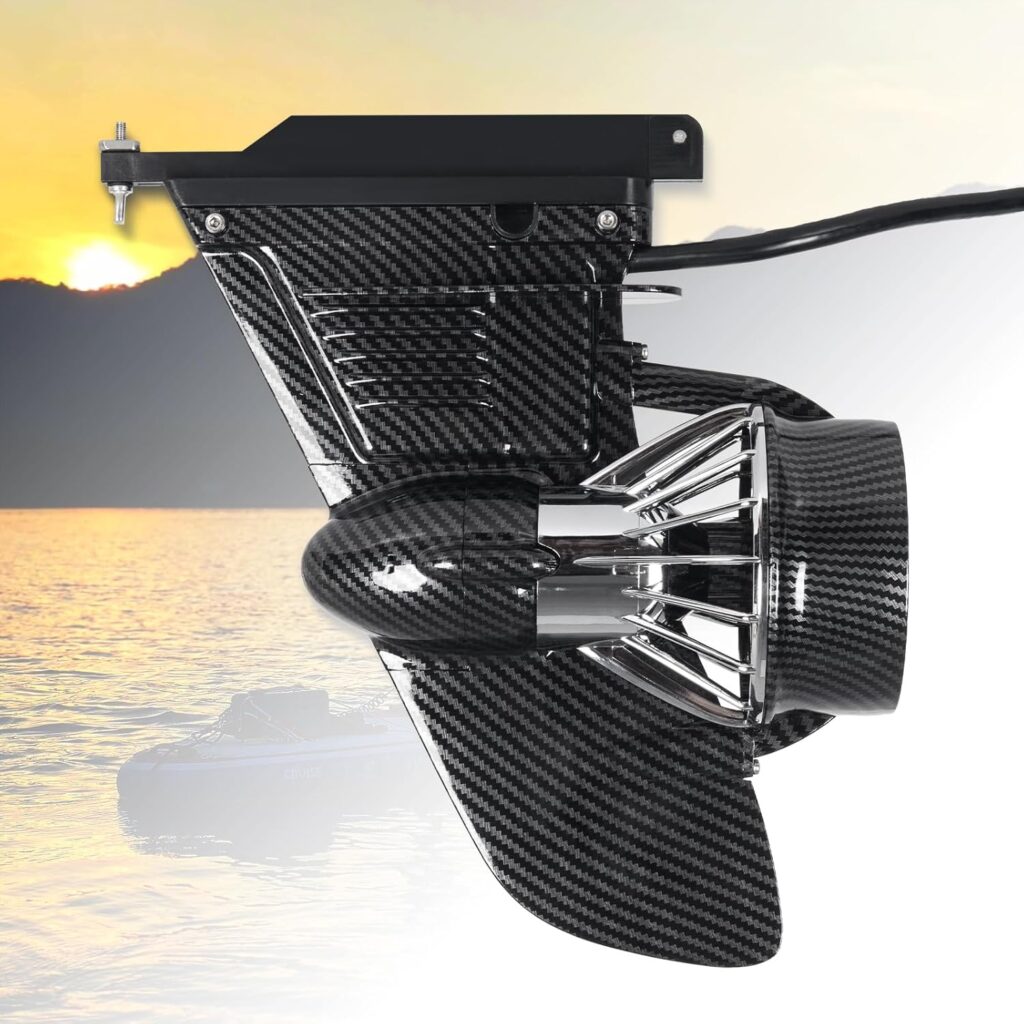
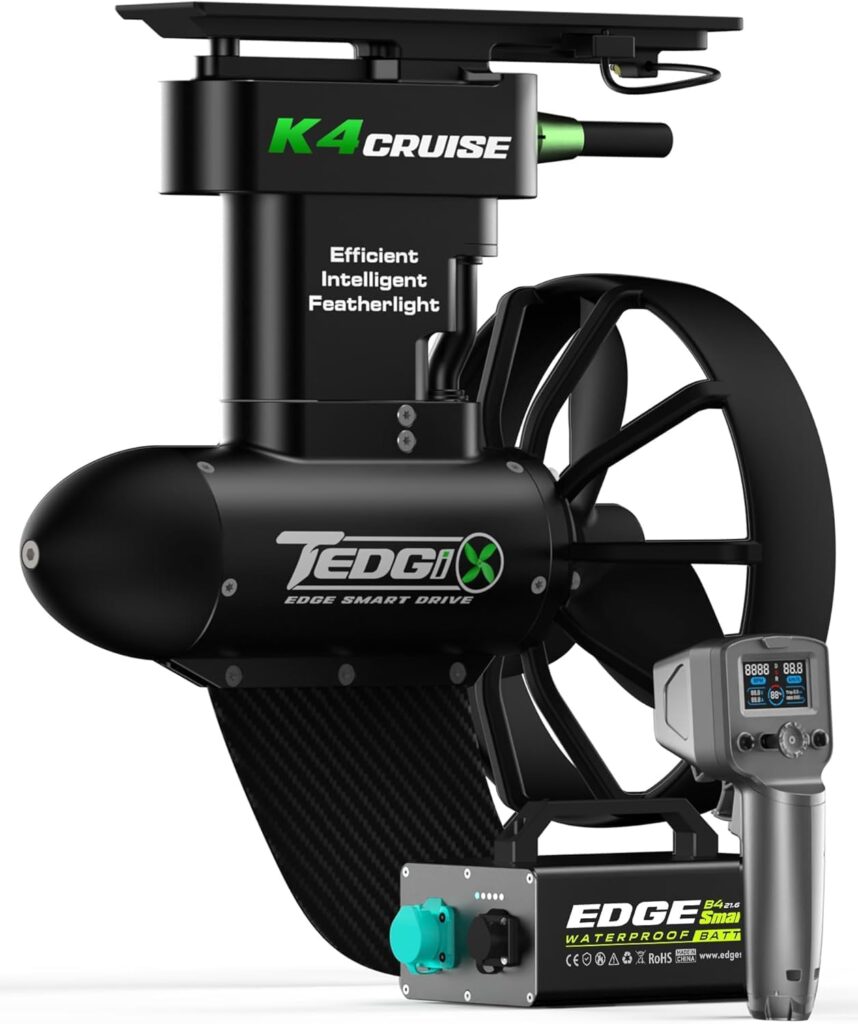
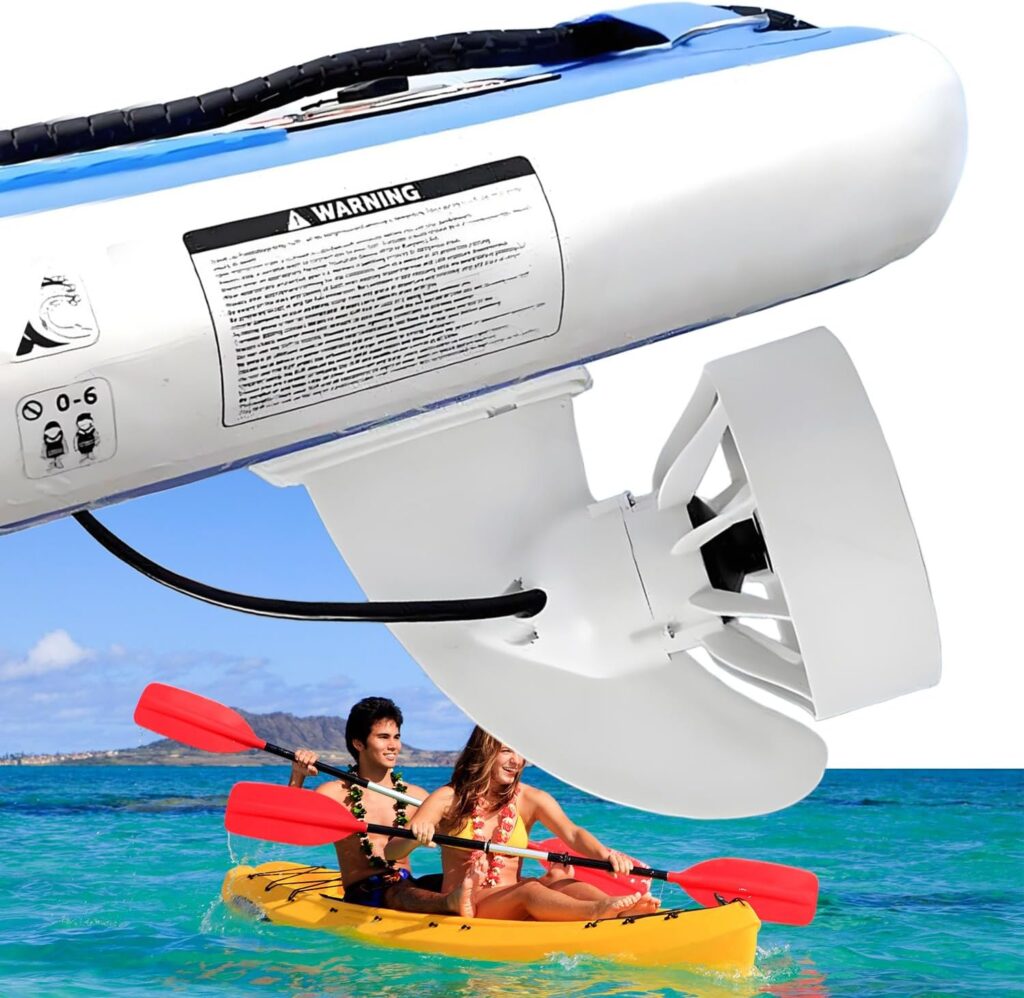
Knowing how a motorized electric fin works makes choosing the right one much easier. The best motorized electric fins for surfing all share the same core technology, but differ in power output, battery life, build quality, and control systems. Here are the top options worth knowing about.
Are Motorized Electric Fins Legal?
One of the most important questions after understanding how a motorized electric fin works is: are motorized electric fins legal where you surf? The answer requires nuance because regulations vary significantly by country, region, and specific waterway.
Competitive Surfing
In all major competitive surfing events, including those sanctioned by the World Surf League (WSL) and the International Surfing Association (ISA), motorized assistance is prohibited. If you’re entering any surf competition, leave the motorized fin at home.
Recreational Use in the United States
There is no single federal law in the U.S. that specifically addresses motorized surfboard fins. However, because the device provides motorized propulsion, some state and local maritime authorities may classify the board as a motorized watercraft potentially requiring registration or limiting where it can be used.
Protected marine areas, designated swimming zones, and certain national park waterways often prohibit motorized devices of any kind.
Always verify with your local beach authority or state maritime agency before your first session.
Australia
Australia’s approach varies by state. In several states, any vessel with motorized propulsion may require registration under maritime safety laws. The relevant authority is your state’s Transport or Maritime Safety department.
New South Wales and Queensland are currently working toward clearer guidelines as electric watercraft become more popular.
Europe
European regulations differ by country. France, Germany, and the Netherlands have existing frameworks for motorized personal watercraft that may apply to electric fins depending on local interpretation.
The UK’s Maritime and Coastguard Agency (MCA) continues to review policies on personal electric watercraft. Always consult your national maritime authority.
| Are Motorized Electric Fins Legal Near You? The safest and smartest approach is to: Check with your local maritime or coastal authority before your first session. Avoid swim zones, wildlife protection areas, and no-motor zones. Carry your fin’s documentation (purchase receipt, spec sheet) as proof of device type. Ride responsibly. Being a good ambassador for the sport helps shape favorable future regulations |
How to Maintain a Motorized Electric Fin
Understanding how a motorized electric fin works mechanically helps you care for it properly. Here’s what you need to do to keep it running perfectly.
- Rinse with fresh water after every session — saltwater is corrosive. A thorough rinse prevents long-term seal and housing damage.
- Dry completely before storing — moisture trapped inside charging ports or seams can degrade electronics over time.
- Charge before storing — lithium-ion batteries last longer when stored at 40–80% charge rather than completely empty.
- Inspect O-rings and seals every 3 months — these keep water out of the electronics. Replace them if they show cracking or flattening.
- Check the propeller for debris after every session — seaweed, fishing line, and small debris can wrap around the shaft and reduce efficiency or damage the motor.
- Update firmware when available — smart fins receive performance optimizations and safety improvements via app-based updates.
- Store away from direct sunlight and extreme heat — UV exposure degrades plastic housings and heat accelerates battery degradation.
Frequently Asked Questions on How Does a Motorized Electric Fin Work
How does a motorized electric fin work differently in saltwater vs. freshwater?
The motor and propulsion mechanism work identically in both environments. The difference is maintenance; saltwater is significantly more corrosive, so a thorough freshwater rinse after every ocean session is essential. Most fins are rated for both environments, but always check your model’s specifications.
Can the motor inside a motorized electric fin overheat?
Modern brushless motors have built-in thermal protection circuits that reduce power or cut off the motor entirely if it reaches unsafe temperatures. In normal recreational use, overheating is rarely an issue. Extended use at maximum power in warm conditions is most likely to trigger thermal protection; the motor simply throttles back temporarily until it cools.
How deep can a motorized electric fin be submerged?
Most quality fins carry an IP67 or IP68 waterproofing rating. IP67 means protection against submersion up to 1 meter for 30 minutes. IP68 means continuous submersion beyond 1 meter, typically rated to 30–50 meters on premium models. For normal surfing, either rating is more than sufficient.
Does a motorized electric fin make noise?
Brushless electric motors are nearly silent. Underwater, you’ll hear a very faint hum at close range, but from the surface or any distance, the fin is effectively inaudible. This is one of the biggest advantages over gas-powered alternatives and one reason they’re welcomed in noise-sensitive environments.
How does a motorized electric fin handle seaweed and ocean debris?
The ducted propeller design helps deflect most surface debris. However, long strands of seaweed or fishing line can still occasionally wrap around the shaft. The motor’s ESC detects sudden resistance changes and cuts power to prevent damage. After any entanglement event, inspect the propeller manually before restarting.
Can I replace the battery in a motorized electric fin?
Most premium models offer user-replaceable battery packs. This is an important purchasing consideration. A fin with a replaceable battery has a much longer usable lifespan. Batteries typically degrade after 500–1,000 charge cycles, so replacement capability extends your fin’s life by years.
How does the wireless remote connect to the motorized electric fin?
Most controllers use either Bluetooth (typically Bluetooth 5.0 for reliability and range) or RF (radio frequency) signals operating at 2.4GHz. RF connections are generally more reliable in challenging environments because they’re less susceptible to interference from other Bluetooth devices. The range is typically 10–30 meters, which is more than sufficient for surfing.
Does a motorized electric fin affect how the board turns?
Minimally, when the motor is running. The thrust vector is linear; it pushes straight forward, so turning response is primarily governed by the board’s shape and your body positioning. When the motor is off, handling is virtually identical to a traditional fin of similar dimensions.
What happens if the remote dies mid-session?
All properly designed motorized electric fins default to motor-off when the controller signal is lost. This is a fundamental safety design requirement. Your board instantly becomes a normal, non-motorized surfboard. Keep the remote charged before sessions; most charge in under an hour.
Are motorized electric fins suitable for children?
With adult supervision and appropriate safety equipment, yes, but always verify the manufacturer’s recommended age and weight minimums. The assisted speed and motor power vary significantly between models. Entry-level fins with gentle power delivery and reliable safety cut-offs are most appropriate for younger riders.
How does a motorized electric fin compare to an eFoil board?
An eFoil board is a complete electric surfboard system with a large motor-powered foil that lifts the board entirely above the water at speed. A motorized electric fin is a retrofit device that adds propulsion to your existing surfboard without lifting it off the water. eFoils are far more powerful, significantly more expensive ($5,000–$15,000+), and require more technical skill. A motorized electric fin is a more accessible entry point into electric-assisted water sports.
The Bottom Line on How Does a Motorized Electric Fin Work
How does a motorized electric fin work? Simply put, a rechargeable battery powers a brushless electric motor, which spins a ducted propeller to generate forward thrust, all sealed inside a waterproof housing that fits your existing surfboard fin box. It’s quiet, clean, intuitive, and genuinely transformative for anyone who loves being on the water.
Whether you’re comparing a motorized electric fin vs. traditional fin, trying to find the best motorized electric fins for surfing for your specific needs, or still weighing up whether motorized electric fins are legal in your area, the technology itself is solid, proven, and only getting better. Battery life is improving every year, motors are getting quieter and more efficient, and prices are steadily dropping as the category matures.
The ocean hasn’t changed. But how you move through it just did.